
When to Visit Switzerland: A Month-by-Month Travel Breakdown for 2026

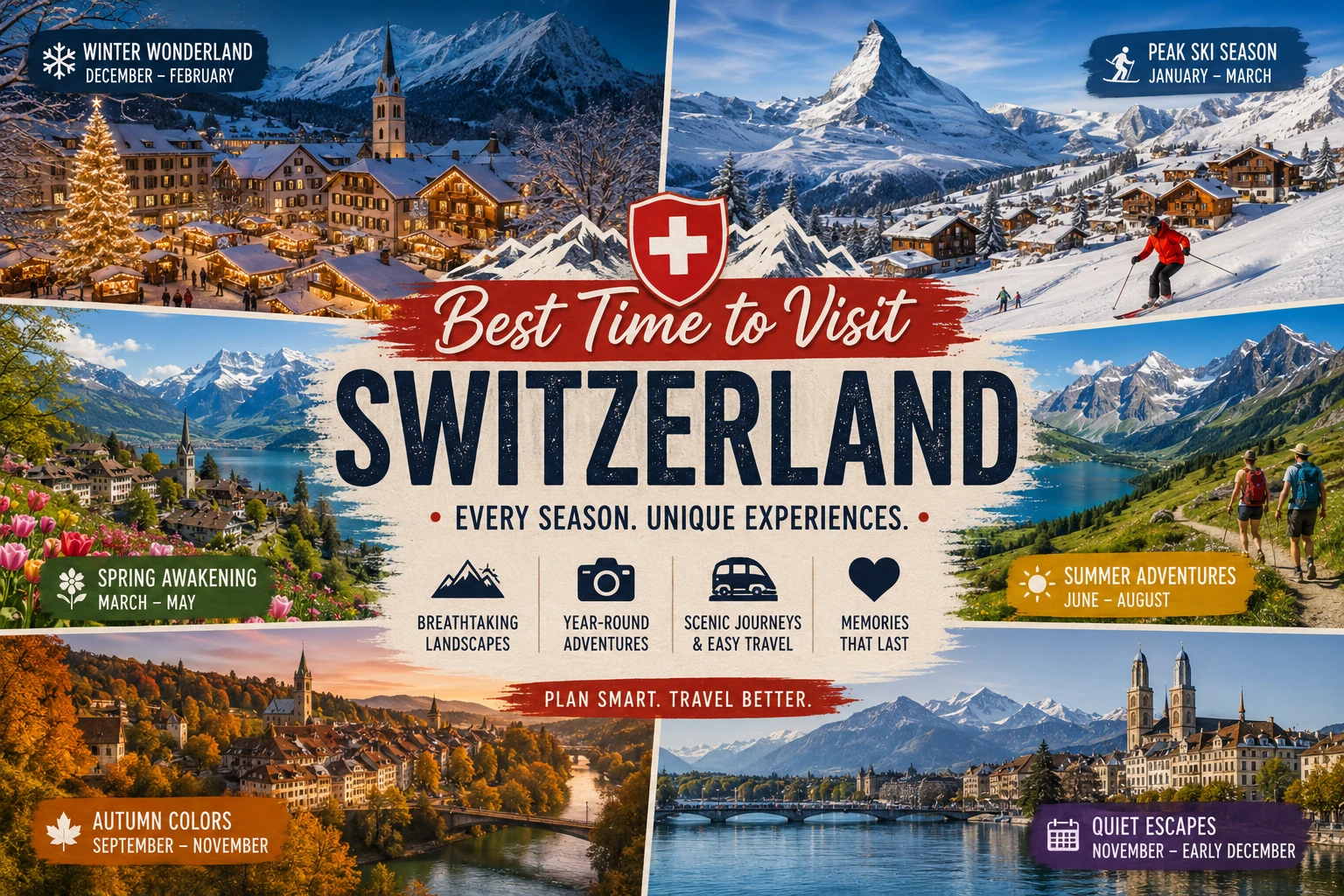
Figuring out the best time to visit Switzerland can feel overwhelming with its dramatic seasonal shifts and diverse landscapes. The truth is, the best time to visit Switzerland depends entirely on what you want to do—whether it’s skiing in the Alps, hiking through wildflower meadows, or sipping mulled wine at Christmas markets. Let’s break down each month and season so you can plan a trip that matches your travel style perfectly.
Understanding the Best Time to Visit Switzerland by Season
Switzerland transforms dramatically throughout the year, and each season offers a completely different experience. From the snowy wonderland of winter to the vibrant green of summer, here’s your month-by-month guide to finding your perfect window.
1. December (Winter Wonderland & Christmas Markets)
Best for: Christmas market lovers, skiers, and cozy alpine escapes
December is pure magic in Switzerland. The cities glow with twinkling lights, and the famous Christmas markets in Zurich, Basel, and Montreux are absolute must-sees. The ski season kicks into high gear by mid-December, with resorts like Zermatt and St. Moritz offering excellent snow conditions. Address: Zurich Christmas Market, Hauptbahnhof, 8001 Zurich. Hours: Late November to December 24, daily 11 AM–9 PM. Price: Free entry; mulled wine around CHF 5–7. Expect cold temperatures ranging from -2°C to 5°C (28°F to 41°F) in lowlands, and much colder in the mountains. The downside? It’s peak tourist season, so book accommodation months in advance.
December (Winter Wonderland & Christmas Markets) can be a strong window for travelers planning the when to visit switzerland: a month-by-month travel breakdown for 2026, especially if you care about the balance between weather, crowds, and overall comfort. Conditions during this period often shape trail access, sightseeing quality, hotel pricing, and how easy it is to enjoy the destination at a relaxed pace.
For many visitors, december (winter wonderland & christmas markets) is best when the goal is matching the trip to your priorities. If you plan around sunrise activities, flexible bookings, and the most popular attractions, this timing can help you get a more rewarding and better organized trip.
2. January (Peak Ski Season & Quieter Cities)
Best for: Serious skiers, snowboarders, and budget-conscious travelers
January offers the most reliable snow conditions in the Alps, with resorts like Verbier and Engelberg reporting deep powder. It’s also the coldest month, with temperatures often dropping to -10°C (14°F) in mountain villages. Address: Ski lift at Engelberg-Titlis, 6390 Engelberg. Hours: 8:30 AM–4:30 PM daily. Price: Day ski pass around CHF 80–100. After the New Year, crowds thin out, and you’ll find better deals on flights and hotels. Just pack thermal layers—this is not the time for light jackets. The Jungfrau region is particularly stunning under a blanket of snow.
January (Peak Ski Season & Quieter Cities) can be a strong window for travelers planning the when to visit switzerland: a month-by-month travel breakdown for 2026, especially if you care about the balance between weather, crowds, and overall comfort. Conditions during this period often shape trail access, sightseeing quality, hotel pricing, and how easy it is to enjoy the destination at a relaxed pace.
For many visitors, january (peak ski season & quieter cities) is best when the goal is matching the trip to your priorities. If you plan around sunrise activities, flexible bookings, and the most popular attractions, this timing can help you get a more rewarding and better organized trip.
3. February (Carnival Season & Late Skiing)
Best for: Culture enthusiasts, families, and intermediate skiers
February brings two highlights: excellent late-season skiing and Switzerland’s famous carnival celebrations. Basel’s Fasnacht (February 23–25, 2026) is the biggest, with elaborate costumes and parades. Address: Fasnacht Basel, 4051 Basel. Hours: Starts at 4 AM on Monday after Ash Wednesday. Price: Free to watch; costumes can be rented. Ski conditions remain superb, though it can get crowded during school holidays (mid-February). Temperatures start to rise slightly, hovering around 0°C to 5°C (32°F to 41°F) in cities. It’s a fantastic month for combining culture with winter sports.
February (Carnival Season & Late Skiing) can be a strong window for travelers planning the when to visit switzerland: a month-by-month travel breakdown for 2026, especially if you care about the balance between weather, crowds, and overall comfort. Conditions during this period often shape trail access, sightseeing quality, hotel pricing, and how easy it is to enjoy the destination at a relaxed pace.
For many visitors, february (carnival season & late skiing) is best when the goal is matching the trip to your priorities. If you plan around sunrise activities, flexible bookings, and the most popular attractions, this timing can help you get a more rewarding and better organized trip.
4. March (Spring Skiing & Shoulder Season Bargains)
Best for: Budget travelers, spring skiers, and early hikers
March is a sweet spot for savvy travelers. Ski resorts still have excellent snow at higher altitudes (like Saas-Fee and Laax), but prices drop significantly after the school holidays. Address: Saas-Fee Ski Resort, 3906 Saas-Fee. Hours: 8:30 AM–4:30 PM. Price: Day pass around CHF 70–90. In lower elevations, spring begins to emerge, with crocuses blooming in valleys. Cities like Lucerne and Bern are less crowded, and hotel rates are 20–30% cheaper than in February. Just be prepared for mixed weather—sunny days can turn rainy quickly.
March (Spring Skiing & Shoulder Season Bargains) can be a strong window for travelers planning the when to visit switzerland: a month-by-month travel breakdown for 2026, especially if you care about the balance between weather, crowds, and overall comfort. Conditions during this period often shape trail access, sightseeing quality, hotel pricing, and how easy it is to enjoy the destination at a relaxed pace.
For many visitors, march (spring skiing & shoulder season bargains) is best when the goal is matching the trip to your priorities. If you plan around sunrise activities, flexible bookings, and the most popular attractions, this timing can help you get a more rewarding and better organized trip.
5. April (Mud Season & Quiet Exploration)
Best for: City explorers, spa lovers, and photographers
April is Switzerland’s “mud season”—too warm for reliable skiing at low altitudes, but too early for most hiking trails. However, this is a fantastic time to explore cities without crowds. Address: The Spa at Badrutt’s Palace, St. Moritz. Hours: 10 AM–8 PM daily. Price: Day spa access around CHF 120. The weather is unpredictable, ranging from 5°C to 15°C (41°F to 59°F), with frequent rain. High-altitude resorts like Zermatt still offer skiing on glaciers. It’s also a great month for photographers—the melting snow creates dramatic waterfalls and misty landscapes.
April (Mud Season & Quiet Exploration) can be a strong window for travelers planning the when to visit switzerland: a month-by-month travel breakdown for 2026, especially if you care about the balance between weather, crowds, and overall comfort. Conditions during this period often shape trail access, sightseeing quality, hotel pricing, and how easy it is to enjoy the destination at a relaxed pace.
For many visitors, april (mud season & quiet exploration) is best when the goal is matching the trip to your priorities. If you plan around sunrise activities, flexible bookings, and the most popular attractions, this timing can help you get a more rewarding and better organized trip.
6. May (Spring Awakening & Lower Prices)
Best for: Budget travelers, garden lovers, and early hikers
May is when Switzerland shakes off winter. The valleys turn emerald green, and wildflowers like edelweiss and gentians start blooming. Address: Swiss National Park, Zernez. Hours: Visitor center 9 AM–5 PM. Price: Free entry. Many mountain huts and cable cars remain closed until June, but lower-altitude trails (like the Five Lakes Walk near Zermatt) become accessible. Temperatures range from 10°C to 20°C (50°F to 68°F). It’s one of the cheapest months for flights and hotels, though you’ll need a rain jacket for sudden showers.
May (Spring Awakening & Lower Prices) can be a strong window for travelers planning the when to visit switzerland: a month-by-month travel breakdown for 2026, especially if you care about the balance between weather, crowds, and overall comfort. Conditions during this period often shape trail access, sightseeing quality, hotel pricing, and how easy it is to enjoy the destination at a relaxed pace.
For many visitors, may (spring awakening & lower prices) is best when the goal is matching the trip to your priorities. If you plan around sunrise activities, flexible bookings, and the most popular attractions, this timing can help you get a more rewarding and better organized trip.
7. June (Peak Hiking Season Begins)
Best for: Hikers, bikers, and nature lovers
June marks the official start of Switzerland’s hiking season. Most mountain lifts and trails open by mid-June, including the famous Eiger Trail and the Oeschinensee hike. Address: Eiger Trail, Grindelwald. Hours: Trail open 24/7; cable car 8 AM–6 PM. Price: Cable car round trip about CHF 40. The weather is pleasant, with temperatures between 15°C and 25°C (59°F to 77°F). The Jungfrau region is bursting with life, and the long daylight hours (up to 16 hours) give you plenty of time to explore. Book accommodation early—June is increasingly popular.
June (Peak Hiking Season Begins) can be a strong window for travelers planning the when to visit switzerland: a month-by-month travel breakdown for 2026, especially if you care about the balance between weather, crowds, and overall comfort. Conditions during this period often shape trail access, sightseeing quality, hotel pricing, and how easy it is to enjoy the destination at a relaxed pace.
For many visitors, june (peak hiking season begins) is best when the goal is matching the trip to your priorities. If you plan around sunrise activities, flexible bookings, and the most popular attractions, this timing can help you get a more rewarding and better organized trip.
8. July (Summer Peak & Festivals)
Best for: Families, festival-goers, and active travelers
July is Switzerland at its most vibrant. The weather is warm and sunny, with temperatures often reaching 30°C (86°F) in cities like Geneva and Zurich. Address: Montreux Jazz Festival, Montreux. Hours: Early July; concerts start at 7 PM. Price: Free outdoor stages; indoor tickets from CHF 50. This is peak tourist season, so expect crowded trails and pricey hotels. The Swiss National Day (August 1) celebrations start late July, with fireworks and bonfires. It’s perfect for swimming in lakes, but book everything months ahead.
July (Summer Peak & Festivals) can be a strong window for travelers planning the when to visit switzerland: a month-by-month travel breakdown for 2026, especially if you care about the balance between weather, crowds, and overall comfort. Conditions during this period often shape trail access, sightseeing quality, hotel pricing, and how easy it is to enjoy the destination at a relaxed pace.
For many visitors, july (summer peak & festivals) is best when the goal is matching the trip to your priorities. If you plan around sunrise activities, flexible bookings, and the most popular attractions, this timing can help you get a more rewarding and better organized trip.
9. August (Swiss National Day & Warmest Month)
Best for: Lake swimmers, mountain bikers, and culture enthusiasts
August is the warmest month, with temperatures in valleys reaching 25–30°C (77–86°F). Address: Lake Geneva, Geneva. Hours: Swimming areas open 24/7. Price: Free. August 1st is Swiss National Day, with spectacular fireworks over the Rhine Falls and Lake Zurich. The hiking is excellent, but trails can be crowded. Mountain bikers love the trails in Lenzerheide and Davos. It’s also harvest season for apricots in the Valais region—don’t miss the local markets.
August (Swiss National Day & Warmest Month) can be a strong window for travelers planning the when to visit switzerland: a month-by-month travel breakdown for 2026, especially if you care about the balance between weather, crowds, and overall comfort. Conditions during this period often shape trail access, sightseeing quality, hotel pricing, and how easy it is to enjoy the destination at a relaxed pace.
For many visitors, august (swiss national day & warmest month) is best when the goal is matching the trip to your priorities. If you plan around sunrise activities, flexible bookings, and the most popular attractions, this timing can help you get a more rewarding and better organized trip.
10. September (Harvest Season & Golden Light)
Best for: Photographers, wine lovers, and peaceful hikers
September is a hidden gem. The summer crowds thin out, the weather remains warm (15–25°C / 59–77°F), and the autumn colors begin to appear. Address: Lavaux Vineyard Terraces, Lutry. Hours: Vineyards open for walking; wineries open 10 AM–6 PM. Price: Wine tasting from CHF 10. The hiking is still excellent, especially in the Engadin Valley. It’s also grape harvest season in the Lavaux region, a UNESCO World Heritage site. This is arguably the best month for photography, with golden light and fewer tourists.
September (Harvest Season & Golden Light) can be a strong window for travelers planning the when to visit switzerland: a month-by-month travel breakdown for 2026, especially if you care about the balance between weather, crowds, and overall comfort. Conditions during this period often shape trail access, sightseeing quality, hotel pricing, and how easy it is to enjoy the destination at a relaxed pace.
For many visitors, september (harvest season & golden light) is best when the goal is matching the trip to your priorities. If you plan around sunrise activities, flexible bookings, and the most popular attractions, this timing can help you get a more rewarding and better organized trip.
11. October (Autumn Colors & Lower Prices)
Best for: Budget travelers, foliage enthusiasts, and city breaks
October paints Switzerland in shades of gold and crimson. The larch forests in the Engadin and the maple trees in the Jura region are spectacular. Address: Aletsch Forest, Aletsch Arena. Hours: Trail open 24/7. Price: Free. Temperatures drop to 5–15°C (41–59°F), and rain becomes more frequent. Many mountain lifts close by mid-October, but lower-altitude hikes remain accessible. Hotel prices drop significantly, making it an excellent time for a budget-friendly city trip to Zurich or Bern.
October (Autumn Colors & Lower Prices) can be a strong window for travelers planning the when to visit switzerland: a month-by-month travel breakdown for 2026, especially if you care about the balance between weather, crowds, and overall comfort. Conditions during this period often shape trail access, sightseeing quality, hotel pricing, and how easy it is to enjoy the destination at a relaxed pace.
For many visitors, october (autumn colors & lower prices) is best when the goal is matching the trip to your priorities. If you plan around sunrise activities, flexible bookings, and the most popular attractions, this timing can help you get a more rewarding and better organized trip.
12. November (Quietest Month & Pre-Christmas Preparations)
Best for: Solitude, spa retreats, and budget travelers
November is Switzerland’s quietest month. The weather is gray and damp, with temperatures around 0–10°C (32–50°F). Address: Thermalbad & Spa Zurich, 8005 Zurich. Hours: 9 AM–10 PM daily. Price: Entry from CHF 35. Most mountain attractions are closed, but cities are peaceful and hotel rates hit their lowest. It’s the perfect time for spa breaks, museum visits, and enjoying cozy fondue restaurants. The Christmas markets start popping up in late November, signaling the start of the festive season.
November (Quietest Month & Pre-Christmas Preparations) can be a strong window for travelers planning the when to visit switzerland: a month-by-month travel breakdown for 2026, especially if you care about the balance between weather, crowds, and overall comfort. Conditions during this period often shape trail access, sightseeing quality, hotel pricing, and how easy it is to enjoy the destination at a relaxed pace.
For many visitors, november (quietest month & pre-christmas preparations) is best when the goal is matching the trip to your priorities. If you plan around sunrise activities, flexible bookings, and the most popular attractions, this timing can help you get a more rewarding and better organized trip.
## 13. Bonus: Year-Round Destinations
Best for: First-time visitors with flexible schedules
If you can’t choose one season, focus on destinations that shine year-round. Address: Jungfraujoch, 3801 Interlaken. Hours: 8 AM–4 PM. Price: Round trip from CHF 210. The Jungfraujoch (“Top of Europe”) is accessible year-round, offering stunning views regardless of season. Similarly, Lucerne’s Chapel Bridge and the Swiss Transport Museum are great in any weather. For winter sports in summer, head to the glacier at Zermatt or Saas-Fee.
14. Bonus: Weather & Crowd Calendar Overview
Best for: Strategic planners
Here’s a quick cheat sheet: Peak season (December–February, July–August): Expect crowds and high prices. Shoulder season (March–April, September–October): Best balance of good weather and lower costs. Off-season (May, November): Cheapest but with limited activities. For the best time to visit Switzerland for hiking, aim for June–September. For skiing, December–March. For budget travel, May or November offer the best deals.
Bonus: Weather & Crowd Calendar Overview can be a strong window for travelers planning the when to visit switzerland: a month-by-month travel breakdown for 2026, especially if you care about the balance between weather, crowds, and overall comfort. Conditions during this period often shape trail access, sightseeing quality, hotel pricing, and how easy it is to enjoy the destination at a relaxed pace.
For many visitors, bonus: weather & crowd calendar overview is best when the goal is matching the trip to your priorities. If you plan around sunrise activities, flexible bookings, and the most popular attractions, this timing can help you get a more rewarding and better organized trip.
Conclusion
Ultimately, the best time to visit Switzerland in 2026 depends on your priorities. If you dream of skiing pristine slopes, plan for January or February. If you want to hike through wildflower meadows, June or September are ideal. For a mix of good weather and fewer crowds, May and October offer fantastic value. No matter when you go, Switzerland’s breathtaking landscapes, efficient transport, and warm hospitality will leave you planning your next visit before you’ve even left.
similar posts
Where to Stay in San Diego in 2026: Best Neighborhoods & Hotels
17 Essential Travel Photography Tips for 2026: Capture Your Adventures Like a Pro
The Ultimate Guide to the Top 10 Places to Visit in the World in 2026
15 Essential Business Travel Tips for 2026: Work Smarter on the Road
15 Must-See Places to Visit in the US in 2026
Best Time to Visit the Grand Canyon in 2026