
Packing Tips for Travel: How to Pack Light and Smart in 2026

We’ve all been there—staring at an open suitcase, wondering how you’ll fit a week’s worth of outfits into a carry-on without looking like a wrinkled mess. You’re about to discover the best packing tips for travel that will save you time, stress, and baggage fees in 2026. Whether you’re a first-time flyer or a seasoned globetrotter, these practical strategies will transform your packing game, helping you pack lighter, smarter, and with zero regrets.
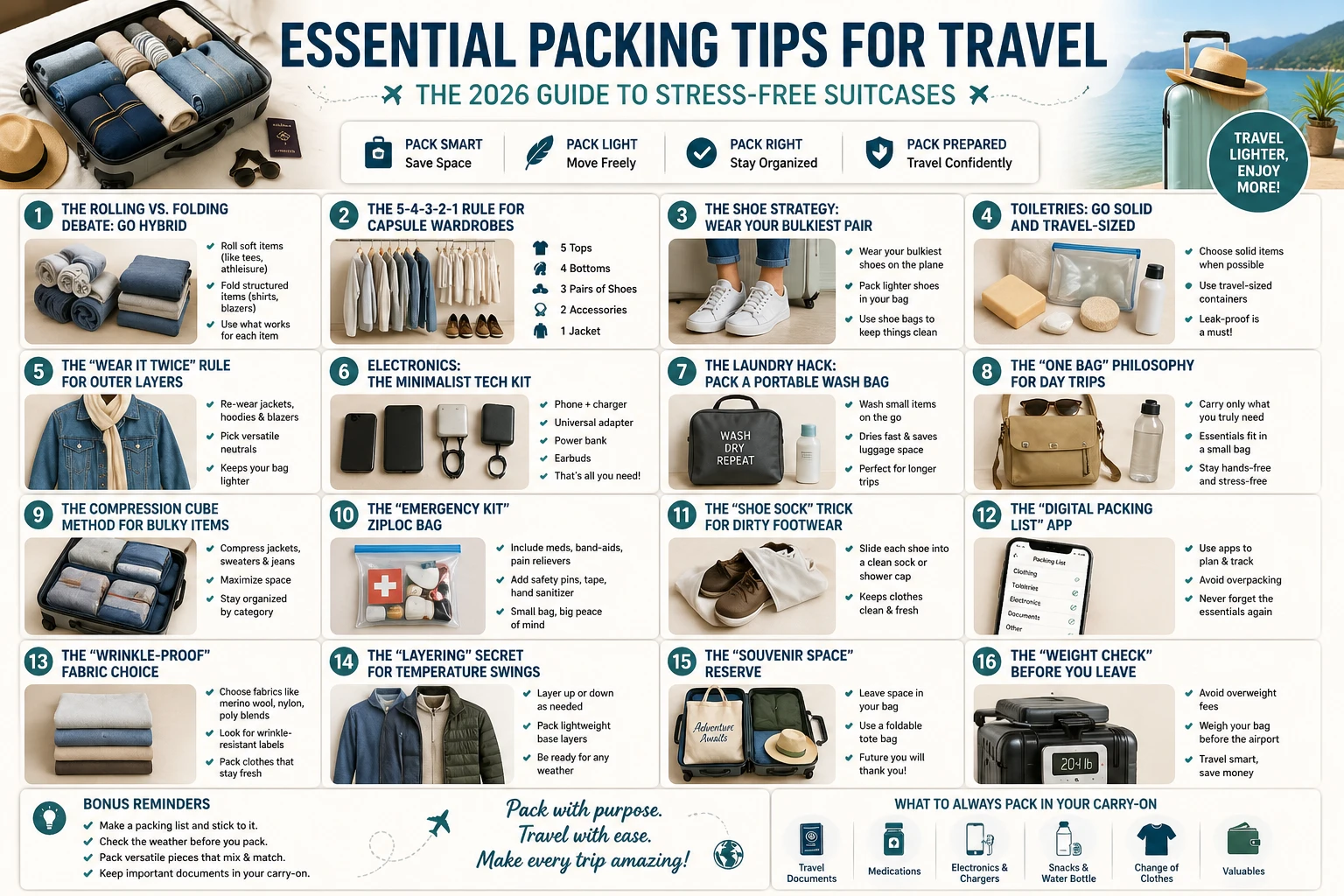
Essential Packing Tips for Travel: The 2026 Guide to Stress-Free Suitcases
1. The Rolling vs. Folding Debate: Go Hybrid
Best for: All travelers, especially those with limited suitcase space
Let’s settle this once and for all: rolling saves space, but folding prevents deep wrinkles. The secret? Use a hybrid method. Roll casual items like t-shirts, jeans, and sweaters—they compress easily and reduce creasing. For dress shirts, blouses, or delicate fabrics, fold them neatly with tissue paper between layers to avoid sharp lines. Address: Your suitcase, anywhere you pack. Hours: Do this the night before departure. Price: Free. Pro tip: Invest in packing cubes (around $20–$40 on Amazon) to keep rolled items separated and organized. By 2026, many cubes come with compression zippers, letting you squeeze out extra air without a vacuum. This technique alone can save 30% more space than traditional folding alone.
2. The 5-4-3-2-1 Rule for Capsule Wardrobes
Best for: Minimalists and carry-on-only travelers
Struggling with overpacking? Adopt the 5-4-3-2-1 method: 5 tops, 4 bottoms, 3 pairs of shoes (including what you wear), 2 dresses or statement pieces, and 1 jacket or sweater. This formula covers a week-long trip with mix-and-match potential. Address: Apply to your packing list. Hours: Plan outfits 2–3 days ahead. Price: Zero, but costs vary by wardrobe. For example, choose neutral colors like black, navy, and beige—they coordinate effortlessly. By 2026, sustainable travel is trending, so prioritize versatile pieces made from wrinkle-resistant fabrics like merino wool or bamboo blends. This rule ensures you’re never stuck with “nothing to wear” while keeping your bag under 15 pounds.
The 5-4-3-2-1 Rule for Capsule Wardrobes is one of the most practical ideas in this Packing Tips for Travel: How to Pack Light and Smart in 2026 guide because it helps travelers avoid avoidable costs, stress, and last-minute mistakes. Using this advice early in your planning process can improve budgeting, save time on the road, and make your overall trip run more smoothly.
For anyone using packing tips for travel: how to pack light and smart in 2026 to plan smarter, this tip matters most when you want better day-to-day travel decisions. Treat it as a repeatable habit rather than a one-time trick, and it will keep delivering value before departure and throughout the trip.
3. The Shoe Strategy: Wear Your Bulkiest Pair
Best for: Travelers with multiple shoe needs
Shoes are the biggest space hogs. Always wear your heaviest, bulkiest pair (boots, sneakers, or heels) on the plane. Pack the rest—like sandals or flats—at the bottom of your bag, stuffed with socks or underwear to save space. Address: Inside your suitcase. Hours: Pack shoes last. Price: Free. For 2026, look for collapsible travel shoes (e.g., Tieks or Rothy’s) that fold flat. Limit yourself to three pairs total: one for walking, one for evenings, and one for activities (like hiking or swimming). This simple hack frees up a shocking amount of room—enough for an extra jacket or souvenirs.
The Shoe Strategy: Wear Your Bulkiest Pair is one of the most practical ideas in this Packing Tips for Travel: How to Pack Light and Smart in 2026 guide because it helps travelers avoid avoidable costs, stress, and last-minute mistakes. Using this advice early in your planning process can improve budgeting, save time on the road, and make your overall trip run more smoothly.
For anyone using packing tips for travel: how to pack light and smart in 2026 to plan smarter, this tip matters most when you want better day-to-day travel decisions. Treat it as a repeatable habit rather than a one-time trick, and it will keep delivering value before departure and throughout the trip.
4. Toiletries: Go Solid and Travel-Sized
Best for: Carry-on flyers and liquid-phobic packers
Tired of the 3-1-1 rule? Switch to solid toiletries in 2026. Shampoo bars, conditioner bars, solid deodorants, and toothpaste tablets bypass liquid restrictions entirely. Address: TSA-approved carry-on bags. Hours: Prep 1–2 days before. Price: $10–$30 per bar, lasting weeks. Brands like Ethique and HiBar are eco-friendly and leak-proof. For liquids you can’t avoid (sunscreen, contact solution), use silicone travel bottles (like GoToob) that are reusable and durable. Pack them in a clear, quart-sized bag for quick airport access. This tip not only saves space but also reduces plastic waste—a win for 2026’s eco-conscious traveler.
Toiletries: Go Solid and Travel-Sized is one of the most practical ideas in this Packing Tips for Travel: How to Pack Light and Smart in 2026 guide because it helps travelers avoid avoidable costs, stress, and last-minute mistakes. Using this advice early in your planning process can improve budgeting, save time on the road, and make your overall trip run more smoothly.
For anyone using packing tips for travel: how to pack light and smart in 2026 to plan smarter, this tip matters most when you want better day-to-day travel decisions. Treat it as a repeatable habit rather than a one-time trick, and it will keep delivering value before departure and throughout the trip.
5. The “Wear It Twice” Rule for Outer Layers
Best for: Cold-weather travelers or those with bulky coats
Jackets, blazers, and sweaters are notorious space hogs. Instead of packing them, wear your heaviest layer on the plane. Address: On your body. Hours: Wear during transit. Price: Free. For example, a trench coat or puffer jacket can double as a blanket on chilly flights. Pack a lightweight, packable down jacket (like Uniqlo’s) as a backup—it compresses into a small pouch. By 2026, many travel jackets include hidden pockets for passports or phones, so you’re maximizing functionality. This rule ensures you stay warm without sacrificing suitcase real estate.
The “Wear It Twice” Rule for Outer Layers is one of the most practical ideas in this Packing Tips for Travel: How to Pack Light and Smart in 2026 guide because it helps travelers avoid avoidable costs, stress, and last-minute mistakes. Using this advice early in your planning process can improve budgeting, save time on the road, and make your overall trip run more smoothly.
For anyone using packing tips for travel: how to pack light and smart in 2026 to plan smarter, this tip matters most when you want better day-to-day travel decisions. Treat it as a repeatable habit rather than a one-time trick, and it will keep delivering value before departure and throughout the trip.
6. Electronics: The Minimalist Tech Kit
Best for: Digital nomads and tech-heavy travelers
Electronics add weight and clutter fast. Limit yourself to a tablet or laptop (not both), a universal adapter (like the one from OneAdaptr), and a portable charger. Address: In your carry-on. Hours: Charge everything the night before. Price: $30–$100 for adapters. Use a cable organizer (e.g., a small pouch from Bagsmart) to prevent tangles. In 2026, many hotels and airports offer wireless charging pads, so skip extra cables if possible. Pro tip: Download offline maps, entertainment, and work files before you leave—no Wi-Fi needed. This keeps your bag light and your devices powered.
Electronics: The Minimalist Tech Kit is one of the most practical ideas in this Packing Tips for Travel: How to Pack Light and Smart in 2026 guide because it helps travelers avoid avoidable costs, stress, and last-minute mistakes. Using this advice early in your planning process can improve budgeting, save time on the road, and make your overall trip run more smoothly.
For anyone using packing tips for travel: how to pack light and smart in 2026 to plan smarter, this tip matters most when you want better day-to-day travel decisions. Treat it as a repeatable habit rather than a one-time trick, and it will keep delivering value before departure and throughout the trip.
7. The Laundry Hack: Pack a Portable Wash Bag
Best for: Long-term travelers or budget backpackers
Extend your wardrobe without packing more. Bring a Scrubba or similar portable wash bag (about $50) to hand-wash clothes in your hotel sink. Address: Inside your suitcase. Hours: Wash every 3–4 days. Price: $30–$60. Add a travel-sized detergent sheet (like Earth Breeze) for mess-free cleaning. Hang items to dry overnight using a retractable clothesline. By 2026, many hostels and Airbnbs provide laundry facilities, but this hack saves you time and money—especially for quick-dry fabrics like nylon or polyester. You’ll feel fresh without overpacking.
The Laundry Hack: Pack a Portable Wash Bag is one of the most practical ideas in this Packing Tips for Travel: How to Pack Light and Smart in 2026 guide because it helps travelers avoid avoidable costs, stress, and last-minute mistakes. Using this advice early in your planning process can improve budgeting, save time on the road, and make your overall trip run more smoothly.
For anyone using packing tips for travel: how to pack light and smart in 2026 to plan smarter, this tip matters most when you want better day-to-day travel decisions. Treat it as a repeatable habit rather than a one-time trick, and it will keep delivering value before departure and throughout the trip.
8. The “One Bag” Philosophy for Day Trips
Best for: City explorers and sightseers
Don’t lug your main suitcase everywhere. Pack a lightweight daypack (10–15 liters) inside your luggage for daily excursions. Address: Inside your main bag. Hours: Use during outings. Price: $20–$50. Look for anti-theft features like lockable zippers or RFID pockets (brands like Pacsafe). In 2026, foldable backpacks are trending—they collapse to the size of a wallet. This bag holds your water bottle, camera, snacks, and a light jacket, keeping your hands free and your valuables secure.
The “One Bag” Philosophy for Day Trips is one of the most practical ideas in this Packing Tips for Travel: How to Pack Light and Smart in 2026 guide because it helps travelers avoid avoidable costs, stress, and last-minute mistakes. Using this advice early in your planning process can improve budgeting, save time on the road, and make your overall trip run more smoothly.
For anyone using packing tips for travel: how to pack light and smart in 2026 to plan smarter, this tip matters most when you want better day-to-day travel decisions. Treat it as a repeatable habit rather than a one-time trick, and it will keep delivering value before departure and throughout the trip.
9. The Compression Cube Method for Bulky Items
Best for: Winter travelers or those with puffy jackets
Compression cubes are a game-changer for bulky items like sweaters, hoodies, and towels. Address: Inside your suitcase. Hours: Pack before rolling. Price: $15–$30 for a set. Unlike vacuum bags, you don’t need a pump—just zip and squeeze out the air. For 2026, brands like Eagle Creek offer ultra-light cubes that reduce volume by 50%. Use them for dirty laundry on the return trip, too. This tip is especially handy for trips to cold climates where layers are essential.
The Compression Cube Method for Bulky Items is one of the most practical ideas in this Packing Tips for Travel: How to Pack Light and Smart in 2026 guide because it helps travelers avoid avoidable costs, stress, and last-minute mistakes. Using this advice early in your planning process can improve budgeting, save time on the road, and make your overall trip run more smoothly.
For anyone using packing tips for travel: how to pack light and smart in 2026 to plan smarter, this tip matters most when you want better day-to-day travel decisions. Treat it as a repeatable habit rather than a one-time trick, and it will keep delivering value before departure and throughout the trip.
10. The “Emergency Kit” Ziploc Bag
Best for: Nervous travelers or families with kids
Prepare for the unexpected with a small Ziploc bag (quart-sized) containing: a band-aid, pain reliever, antacids, a safety pin, a stain remover wipe, and a spare charging cable. Address: In your carry-on. Hours: Pack last. Price: Under $10. This kit solves common travel mishaps—like a broken zipper or a headache—without a pharmacy hunt. By 2026, many travelers add a mini sewing kit or duct tape strip for quick fixes. It’s a tiny addition with huge peace of mind.
The “Emergency Kit” Ziploc Bag is one of the most practical ideas in this Packing Tips for Travel: How to Pack Light and Smart in 2026 guide because it helps travelers avoid avoidable costs, stress, and last-minute mistakes. Using this advice early in your planning process can improve budgeting, save time on the road, and make your overall trip run more smoothly.
For anyone using packing tips for travel: how to pack light and smart in 2026 to plan smarter, this tip matters most when you want better day-to-day travel decisions. Treat it as a repeatable habit rather than a one-time trick, and it will keep delivering value before departure and throughout the trip.
11. The “Shoe Sock” Trick for Dirty Footwear
Best for: Beach or hiking travelers
Keep your clean clothes separate from muddy shoes. Use shower caps (free from hotels) or dedicated shoe bags to cover soles. Address: Over your shoes. Hours: Pack after wearing. Price: Free. For 2026, reusable silicone shoe covers are popular—they’re waterproof and washable. This prevents dirt and odor from spreading to your wardrobe, saving you from re-packing everything.
The “Shoe Sock” Trick for Dirty Footwear is one of the most practical ideas in this Packing Tips for Travel: How to Pack Light and Smart in 2026 guide because it helps travelers avoid avoidable costs, stress, and last-minute mistakes. Using this advice early in your planning process can improve budgeting, save time on the road, and make your overall trip run more smoothly.
For anyone using packing tips for travel: how to pack light and smart in 2026 to plan smarter, this tip matters most when you want better day-to-day travel decisions. Treat it as a repeatable habit rather than a one-time trick, and it will keep delivering value before departure and throughout the trip.
12. The “Digital Packing List” App
Best for: Forgetful travelers
Stop relying on memory. Use an app like PackPoint or TripList to create customized packing lists based on your destination, weather, and activities. Address: On your phone. Hours: Use 1 week before departure. Price: Free or $3–$5 for premium features. These apps sync with your calendar and even suggest items like a raincoat if rain is forecasted. In 2026, AI-powered versions learn your preferences over time—so you never forget your phone charger again.
The “Digital Packing List” App is one of the most practical ideas in this Packing Tips for Travel: How to Pack Light and Smart in 2026 guide because it helps travelers avoid avoidable costs, stress, and last-minute mistakes. Using this advice early in your planning process can improve budgeting, save time on the road, and make your overall trip run more smoothly.
For anyone using packing tips for travel: how to pack light and smart in 2026 to plan smarter, this tip matters most when you want better day-to-day travel decisions. Treat it as a repeatable habit rather than a one-time trick, and it will keep delivering value before departure and throughout the trip.
13. The “Wrinkle-Proof” Fabric Choice
Best for: Business travelers or fashion-conscious packers
Choose wrinkle-resistant fabrics: polyester blends, nylon, spandex, or treated cottons. Address: In your suitcase. Hours: Shop before your trip. Price: Varies by brand. Avoid 100% linen or silk unless you’re okay with ironing. For 2026, many travel clothing brands (like Athleta or Wool&) offer “no-iron” shirts that look crisp after hours in a bag. This saves you time and keeps you looking polished.
The “Wrinkle-Proof” Fabric Choice is one of the most practical ideas in this Packing Tips for Travel: How to Pack Light and Smart in 2026 guide because it helps travelers avoid avoidable costs, stress, and last-minute mistakes. Using this advice early in your planning process can improve budgeting, save time on the road, and make your overall trip run more smoothly.
For anyone using packing tips for travel: how to pack light and smart in 2026 to plan smarter, this tip matters most when you want better day-to-day travel decisions. Treat it as a repeatable habit rather than a one-time trick, and it will keep delivering value before departure and throughout the trip.
14. The “Layering” Secret for Temperature Swings
Best for: Travelers to unpredictable climates
Pack in layers: a base layer (merino wool), mid-layer (fleece), and outer layer (windbreaker). Address: On your body or in your bag. Hours: Plan for 10–20°F variance. Price: $50–$200 per piece. This system works for both cold and warm destinations—just remove or add layers. By 2026, many travelers use “3-in-1” jackets (like Columbia’s) that zip apart for versatility. It’s efficient and eliminates the need for a heavy coat.
The “Layering” Secret for Temperature Swings is one of the most practical ideas in this Packing Tips for Travel: How to Pack Light and Smart in 2026 guide because it helps travelers avoid avoidable costs, stress, and last-minute mistakes. Using this advice early in your planning process can improve budgeting, save time on the road, and make your overall trip run more smoothly.
For anyone using packing tips for travel: how to pack light and smart in 2026 to plan smarter, this tip matters most when you want better day-to-day travel decisions. Treat it as a repeatable habit rather than a one-time trick, and it will keep delivering value before departure and throughout the trip.
15. The “Souvenir Space” Reserve
Best for: Shoppers and collectors
Leave 10–20% of your suitcase empty for souvenirs. Address: Inside your bag. Hours: Plan during packing. Price: Free. Use a collapsible tote or duffel bag (like a Baggu) for overflow on the return trip. In 2026, many airports offer “pack and ship” services for heavy items, but this hack is cheaper and easier. You’ll avoid the dreaded “I can’t fit this” moment at the market.
The “Souvenir Space” Reserve is one of the most practical ideas in this Packing Tips for Travel: How to Pack Light and Smart in 2026 guide because it helps travelers avoid avoidable costs, stress, and last-minute mistakes. Using this advice early in your planning process can improve budgeting, save time on the road, and make your overall trip run more smoothly.
For anyone using packing tips for travel: how to pack light and smart in 2026 to plan smarter, this tip matters most when you want better day-to-day travel decisions. Treat it as a repeatable habit rather than a one-time trick, and it will keep delivering value before departure and throughout the trip.
16. The “Weight Check” Before You Leave
Best for: Budget airlines with strict limits
Weigh your suitcase with a portable luggage scale (like the one from Etekcity, about $12). Address: At home. Hours: The night before. Price: Under $15. Most scales are accurate to within 0.1 pounds. In 2026, many airlines enforce 50-pound limits, so redistribute items into your carry-on if needed. This simple step saves you $50–$100 in overweight fees at the airport.
The “Weight Check” Before You Leave is one of the most practical ideas in this Packing Tips for Travel: How to Pack Light and Smart in 2026 guide because it helps travelers avoid avoidable costs, stress, and last-minute mistakes. Using this advice early in your planning process can improve budgeting, save time on the road, and make your overall trip run more smoothly.
For anyone using packing tips for travel: how to pack light and smart in 2026 to plan smarter, this tip matters most when you want better day-to-day travel decisions. Treat it as a repeatable habit rather than a one-time trick, and it will keep delivering value before departure and throughout the trip.
Conclusion
Mastering these packing tips for travel in 2026 isn’t just about saving space—it’s about reclaiming your peace of mind. By rolling smarter, choosing versatile fabrics, and embracing minimalism, you’ll breeze through airports with a lighter load and more confidence. Remember, the best suitcase is the one you barely notice. So next time you zip up your bag, take a breath: you’ve got everything you need and nothing you don’t. Happy travels!
similar posts
Where to Stay in San Diego in 2026: Best Neighborhoods & Hotels
17 Essential Travel Photography Tips for 2026: Capture Your Adventures Like a Pro
The Ultimate Guide to the Top 10 Places to Visit in the World in 2026
15 Essential Business Travel Tips for 2026: Work Smarter on the Road
15 Must-See Places to Visit in the US in 2026
Best Time to Visit the Grand Canyon in 2026