
The Ultimate Guide to Travel Packing Tips for 2026: Pack Smarter, Not Heavier

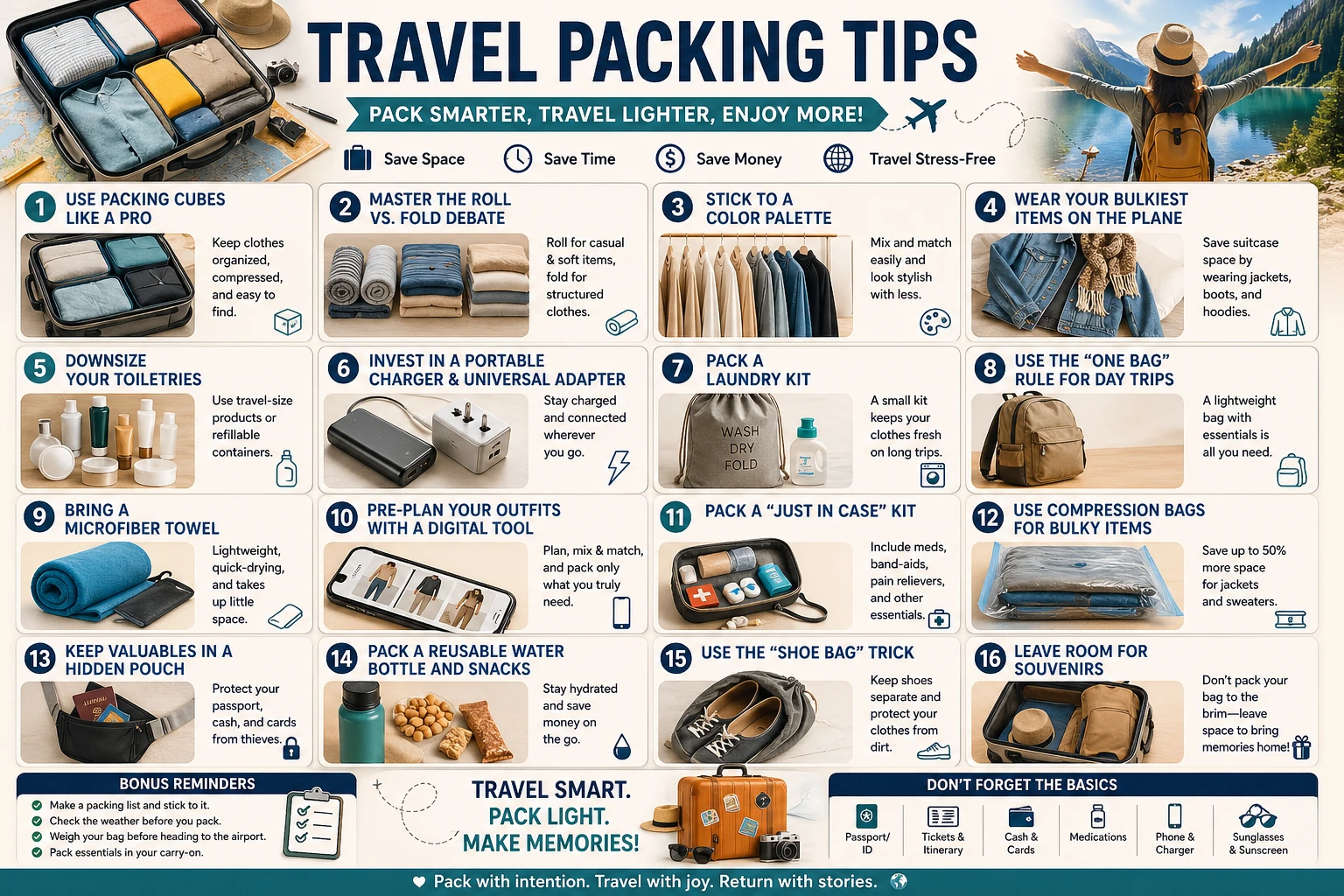
You’ve probably spent more time staring at an open suitcase than actually planning your itinerary, wondering how to fit your entire life into a carry-on without looking like a walking laundry pile. Well, I’ve got your back with these travel packing tips that’ll save you from overpacking, wrinkled clothes, and those last-minute “I forgot my charger” panics. Whether you’re jetting off for a weekend city break or a month-long backpacking adventure, these strategies are tested by real travelers (including me) and updated for 2026’s travel realities.
Why These Travel Packing Tips Will Transform Your Trips
Let’s be honest: packing is the least glamorous part of travel, but it’s the one that makes or breaks your trip. These travel packing tips aren’t just about rolling clothes—they’re about saving time, money, and sanity. From the 3-1-1 rule to tech hacks for 2026, I’ll show you how to pack like a pro, avoid checked bag fees, and still have room for souvenirs. Ready to ditch the stress? Let’s dive into the list.
1. Use Packing Cubes Like a Pro
Best for: Organization nerds and frequent flyers
Packing cubes are the unsung heroes of modern travel. Instead of digging through a black hole of clothes, you’ll have separate compartments for tops, bottoms, and underwear. In 2026, look for compression cubes that use a two-way zipper system to squeeze out air, reducing volume by up to 30%. Address: Any luggage store or Amazon (search for “compression packing cubes”). Price: $15-$30 for a set of 4. Hours: Available 24/7 online. Pro tip: Color-code them—blue for dirty laundry, green for clean, and red for items you need during transit. This simple system saved me from unpacking my entire bag at a hostel in Barcelona.
2. Master the Roll vs. Fold Debate
Best for: Anyone who hates wrinkled clothes
I’ve tried both, and here’s the truth: rolling saves space and reduces wrinkles for casual fabrics like cotton and synthetics. Folding works better for dress shirts and blazers. For 2026, combine both: roll t-shirts and jeans, then fold button-downs over them. Address: Your suitcase, any time you pack. Price: Free! Hours: Do this before you zip up. Research from the Travel Goods Association shows rolling can save 20% more space than folding alone. For a suit or dress, use the “bundle wrap” method—wrap clothes around a central core (like a toiletry bag) to minimize creases.
3. Stick to a Color Palette
Best for: Minimalists and capsule wardrobe lovers
Choose 3-4 colors (like black, navy, white, and olive) that all mix and match. This means 5 tops and 3 bottoms can create 15 outfits, not 8 mismatched ones. Address: Your closet, before you pack. Price: Free to implement. Hours: Spend 15 minutes planning. In 2026, neutrals are in, but add one pop color (like a red scarf) for photos. I packed for a 10-day trip to Japan with just a carry-on using this trick—no repeats, no regrets.
4. Wear Your Bulkiest Items on the Plane
Best for: Avoiding overweight luggage fees
Your heaviest shoes, jacket, and jeans should be on your body, not in your bag. In 2026, airlines are stricter than ever with carry-on weight limits (often 7-10 kg). Address: At the airport, before you check in. Price: Free. Hours: Do this before leaving home. I once wore a denim jacket, hiking boots, and cargo pants on a flight to Iceland, saving 3 kg in my bag. Layer up—you can always remove items once seated.
5. Downsize Your Toiletries
Best for: Carry-on-only travelers
The 3-1-1 rule (3.4 oz or 100 ml per container, 1 quart-sized bag) hasn’t changed for 2026, but you can hack it. Use solid shampoo bars, toothpaste tablets, and multi-purpose products like a 2-in-1 moisturizer with SPF. Address: Drugstores or online (check brands like Lush for solids). Price: $5-$15 per item. Hours: Buy before your trip. Pro tip: Decant into reusable silicone bottles—they’re lighter than plastic and TSA-approved. I’ve used the same set for 3 years without issues.
6. Invest in a Portable Charger and Universal Adapter
Best for: Tech-dependent travelers
Dead phone at the airport? Nightmare. In 2026, get a 20,000 mAh power bank (charges a phone 4-5 times) and a universal adapter with USB-C ports. Address: Electronics stores or Amazon (search “universal travel adapter 2026”). Price: $25-$50 for a quality pair. Hours: Keep in your personal item. I learned this the hard way in Morocco when my phone died and I missed my bus. Also, pack a short extension cord—it’s a game-changer for crowded hostel rooms.
7. Pack a Laundry Kit
Best for: Long trips and budget travelers
A small packet of laundry detergent sheets (like Tru Earth) and a sink stopper let you wash clothes anywhere. Address: Online or camping stores. Price: $10 for 30 sheets. Hours: Use at your hotel sink. In 2026, many hotels have banned single-use plastics, so eco-friendly sheets are perfect. I packed 5 shirts for a 2-week trip to Thailand and washed them in 15 minutes each night.
8. Use the “One Bag” Rule for Day Trips
Best for: Overpackers and day-trippers
Your main suitcase should be a carry-on, and your daypack should be a foldable backpack (like the Matador). This forces you to prioritize. Address: Outdoor gear stores. Price: $30-$60 for a packable daypack. Hours: Pack it inside your main bag. I once brought a full duffel for a 3-day trip and regretted every step. In 2026, airlines are cracking down on personal item sizes, so measure your bag before you go.
9. Bring a Microfiber Towel
Best for: Hostel dwellers and beach lovers
Microfiber towels dry 3x faster than cotton and take up 1/4 of the space. Address: Camping stores or Amazon. Price: $10-$20. Hours: Pack it rolled. In 2026, many eco-hostels don’t provide towels, so this is a lifesaver. I use mine as a blanket on cold planes, too.
10. Pre-Plan Your Outfits with a Digital Tool
Best for: Fashion-forward travelers
Use apps like Stylebook or Indyx to digitally plan outfits before packing. Address: App Store or Google Play. Price: Free to $5 for premium. Hours: 30 minutes before packing. In 2026, AI packing assistants are emerging, but these apps work great. I saved 2 hours of indecision before a trip to Paris.
11. Pack a “Just in Case” Kit
Best for: Paranoid packers (like me)
Include a small first-aid kit, duct tape (wrapped around a pencil), a safety pin, and a spare charging cable. Address: Dollar store or travel sections. Price: Under $10. Hours: Keep in your daypack. I fixed a broken backpack strap with duct tape in Vietnam—pure gold.
12. Use Compression Bags for Bulky Items
Best for: Winter travelers and gear enthusiasts
Vacuum-seal bags work for checked luggage, but for carry-ons, use roll-up compression bags (no vacuum needed). Address: Luggage stores or Amazon. Price: $10-$20 for 3. Hours: Pack before your trip. In 2026, these are a must for ski trips. I compressed a down jacket into a sandwich-sized bag.
13. Keep Valuables in a Hidden Pouch
Best for: Safety-conscious travelers
A money belt or neck pouch under your clothes keeps passport, cards, and cash safe. Address: Travel stores or online. Price: $10-$20. Hours: Wear it during transit. In 2026, RFID-blocking versions are standard. I never leave home without mine in crowded markets.
14. Pack a Reusable Water Bottle and Snacks
Best for: Health-conscious and budget travelers
Empty bottles pass security, and snacks save you from overpriced airport food. Address: Any store. Price: $10-$30 for a bottle. Hours: Fill after security. In 2026, many airports have free water stations. I bring nuts and protein bars for long layovers.
15. Use the “Shoe Bag” Trick
Best for: Keeping clothes clean
Put shoes in a shower cap or dedicated shoe bag to avoid dirtying your clothes. Address: Dollar stores or reuse hotel shower caps. Price: Free to $5. Hours: Pack shoes last. I stuff socks inside shoes to save space.
16. Leave Room for Souvenirs
Best for: Shoppers and gift-givers
Pack a foldable tote or leave 20% of your bag empty. Address: Your bag, during packing. Price: Free. Hours: Plan ahead. In 2026, many destinations have eco-friendly markets. I regretted not having space for olive oil in Greece.
Conclusion
Packing doesn’t have to be a headache—it’s a skill you can master with these travel packing tips for 2026. From rolling clothes to using compression cubes, every trick here saves you time, money, and stress. The key is to plan ahead, prioritize versatility, and always leave a little room for the unexpected (or that perfect souvenir). Next time you zip up your suitcase, you’ll feel like a pro—and your back will thank you. Happy travels!
similar posts
The Ultimate Guide to the Best Time to Visit Switzerland in 2026
The Ultimate Guide to Pet Friendly Hotels Atlanta 2026: Where You and Your Furry Friend Will Love Staying
Where to Stay in Puerto Rico in 2026: The Ultimate Neighborhood & Hotel Guide
The Ultimate Guide to the Best Places to Visit in USA in 2026
15 Essential Travel Tips and Tricks for 2026: Save Money, Time, and Stress
The Ultimate Guide to the Best Pet Friendly Hotels in New Orleans Has to Offer in 2026