
Travel Tips for 2026: Smarter, Smoother, and Greener Adventures

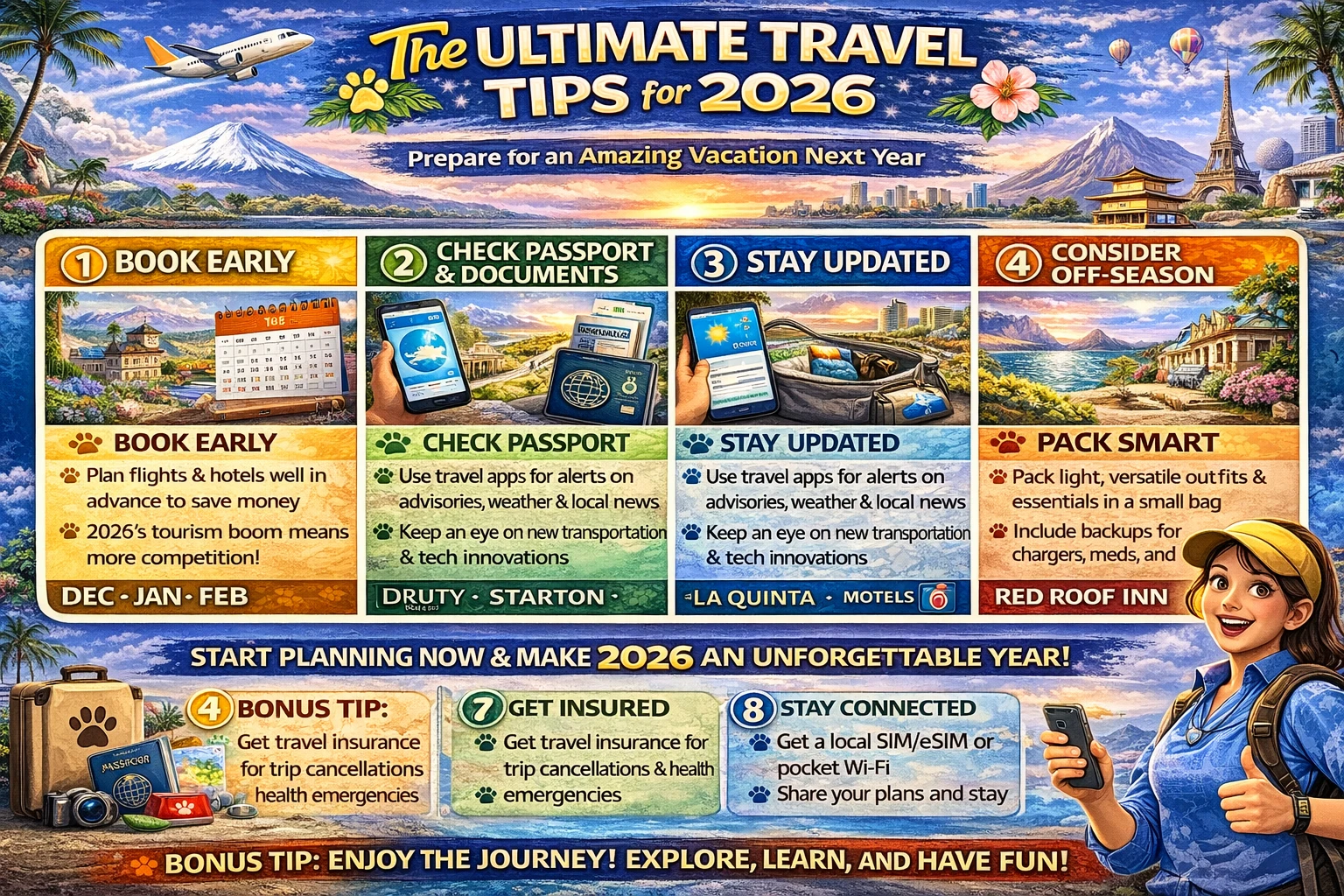
You want to travel better, but between packing, planning, and navigating new places, it’s easy to feel overwhelmed. This guide delivers the essential, actionable travel tips you need to transform your next trip from stressful to seamless. Whether you’re a first-time flyer or a seasoned globetrotter, these insights will help you save money, time, and your sanity. Let’s dive into the strategies that will define smart travel in 2026.
Essential Travel Tips for the Modern Explorer
The art of travel is constantly evolving. The best travel tips for 2026 go beyond simple packing lists to embrace technology, sustainability, and a more intuitive approach to exploring our world. These foundational strategies are designed to work whether you’re backpacking through Southeast Asia or enjoying a luxury safari.
1. Master the Art of Digital & Physical Organization
Keeping your trip details organized is the single biggest stress-reducer. In 2026, this means a hybrid approach. Digitally, use a dedicated app like TripIt or Wanderlog to automatically compile flight confirmations, hotel bookings, and car rental reservations into one master itinerary. Physically, invest in a slim, durable travel document organizer. Use it to hold your passport, printed visas, a backup credit card, and a small amount of local currency for immediate arrival costs. Always take a photo of your passport’s main page and your visa, and email them to yourself as an encrypted file for worst-case scenarios. This system ensures you’re prepared for both seamless digital check-ins and any situation where paper is king.
Best for: All travelers, especially those with complex, multi-stop itineraries.
2. Pack a “Go-Bag” for Flight Essentials
Never rummage through your overhead luggage again. The “Go-Bag” is a small pouch (like a slim packing cube) that contains everything you’ll want during the flight, stored in your under-seat personal item. Key items include a large scarf or pashmina (doubles as a blanket), a quality eye mask and noise-canceling headphones, a reusable water bottle (empty until you pass security), moisturizer and lip balm (cabin air is brutally dry), your charging cables and a compact power bank, and any essential medication. This tip saves you from awkwardly opening your main bag in a cramped aisle and keeps you comfortable and hydrated from gate to gate.
Best for: Long-haul flyers and anyone who values in-flight comfort.
Pack a “Go-Bag” for Flight Essentials is one of the most practical ideas in this Travel Tips for 2026: Smarter, Smoother, and Greener Adventures guide because it helps travelers avoid avoidable costs, stress, and last-minute mistakes. Using this advice early in your planning process can improve budgeting, save time on the road, and make your overall trip run more smoothly.
For anyone using travel tips for 2026: smarter, smoother, and greener adventures to plan smarter, this tip matters most when you want better day-to-day travel decisions. Treat it as a repeatable habit rather than a one-time trick, and it will keep delivering value before departure and throughout the trip.
3. Leverage “Shoulder Season” and Dynamic Booking Tools
Forget just comparing Tuesday vs. Wednesday flights. In 2026, savvy travelers use tools like Google Flights’ “Price Graph” and Hopper’s watchlists to track fares and predict the best time to buy. The real secret is targeting the “shoulder season”—the periods just before or after peak tourist season. You’ll find better weather than in the true off-season, significantly fewer crowds, and prices that can be 30-50% lower. For example, visit Greece in late May or late September, or explore Japan in November after the autumn leaves peak. Set fare alerts and be ready to book when you get the notification.
Best for: Budget-conscious travelers and those who dislike crowds.
Leverage “Shoulder Season” and Dynamic Booking Tools is one of the most practical ideas in this Travel Tips for 2026: Smarter, Smoother, and Greener Adventures guide because it helps travelers avoid avoidable costs, stress, and last-minute mistakes. Using this advice early in your planning process can improve budgeting, save time on the road, and make your overall trip run more smoothly.
For anyone using travel tips for 2026: smarter, smoother, and greener adventures to plan smarter, this tip matters most when you want better day-to-day travel decisions. Treat it as a repeatable habit rather than a one-time trick, and it will keep delivering value before departure and throughout the trip.
4. Embrace the “One-Carry-On” Challenge
Checked baggage fees are rising, and luggage delays are, unfortunately, still common. Challenge yourself to travel with just a carry-on and a personal item for trips under two weeks. The key is packing versatile, layerable clothing in a color scheme (e.g., all neutrals with one pop of color) and choosing technical fabrics that resist wrinkles and dry quickly. Use packing cubes to compress and organize. Not only does this save you money and time at the airport, but it also grants you incredible freedom and mobility, making it easier to hop on a last-minute train or navigate cobblestone streets.
Best for: City break travelers, backpackers, and anyone wanting maximum flexibility.
Embrace the “One-Carry-On” Challenge is one of the most practical ideas in this Travel Tips for 2026: Smarter, Smoother, and Greener Adventures guide because it helps travelers avoid avoidable costs, stress, and last-minute mistakes. Using this advice early in your planning process can improve budgeting, save time on the road, and make your overall trip run more smoothly.
For anyone using travel tips for 2026: smarter, smoother, and greener adventures to plan smarter, this tip matters most when you want better day-to-day travel decisions. Treat it as a repeatable habit rather than a one-time trick, and it will keep delivering value before departure and throughout the trip.
5. Download These Non-Negotiable Apps
Your phone is your most powerful travel tool. Beyond Google Maps (which you should download offline maps for), essential apps for 2026 include: Google Translate (use the camera feature for instant menu translation), Citymapper (for superior urban transit routing), XE Currency for live exchange rates, and WhatsApp or Signal for free communication over Wi-Fi. Also, download the app for your local transit authority (e.g., BVG for Berlin, Oyster for London) to buy digital tickets. Finally, have a trusted VPN app installed to securely use public Wi-Fi.
Best for: Tech-savvy travelers and those visiting countries with language barriers.
Download These Non-Negotiable Apps is one of the most practical ideas in this Travel Tips for 2026: Smarter, Smoother, and Greener Adventures guide because it helps travelers avoid avoidable costs, stress, and last-minute mistakes. Using this advice early in your planning process can improve budgeting, save time on the road, and make your overall trip run more smoothly.
For anyone using travel tips for 2026: smarter, smoother, and greener adventures to plan smarter, this tip matters most when you want better day-to-day travel decisions. Treat it as a repeatable habit rather than a one-time trick, and it will keep delivering value before departure and throughout the trip.
6. Get a Local SIM Card or eSIM Immediately
Roaming charges can still be a budget-killer. The moment you land, prioritize getting connected. In 2026, eSIMs are the gold standard. Services like Airalo or Nomad allow you to buy and install a digital SIM for your destination country before you even take off, often at a fraction of the cost of carrier roaming. If your phone doesn’t support eSIMs, seek out a local telecom kiosk at the airport (like Vodafone, Orange, or Docomo) for a physical prepaid SIM with a data package. Having reliable, affordable data transforms your ability to navigate, translate, and share your journey.
Best for: Everyone. Reliable data is no longer a luxury, but a safety and convenience necessity.
Get a Local SIM Card or eSIM Immediately is one of the most practical ideas in this Travel Tips for 2026: Smarter, Smoother, and Greener Adventures guide because it helps travelers avoid avoidable costs, stress, and last-minute mistakes. Using this advice early in your planning process can improve budgeting, save time on the road, and make your overall trip run more smoothly.
For anyone using travel tips for 2026: smarter, smoother, and greener adventures to plan smarter, this tip matters most when you want better day-to-day travel decisions. Treat it as a repeatable habit rather than a one-time trick, and it will keep delivering value before departure and throughout the trip.
7. Practice “Stealth Wealth” and Security Basics
Drawing unnecessary attention is a rookie mistake. Avoid flashy designer luggage tags and loudly discussing your expensive plans in public. Use a crossbody bag or money belt worn under your clothes for passports and cash in crowded areas. When paying, use a credit card with no foreign transaction fees or a debit card from a service like Charles Schwab that reimburses ATM fees worldwide. Never keep all your cash and cards in one place—split them between your bag, your person, and your hotel safe.
Best for: All travelers, particularly those visiting bustling cities or crowded tourist sites.
Practice “Stealth Wealth” and Security Basics is one of the most practical ideas in this Travel Tips for 2026: Smarter, Smoother, and Greener Adventures guide because it helps travelers avoid avoidable costs, stress, and last-minute mistakes. Using this advice early in your planning process can improve budgeting, save time on the road, and make your overall trip run more smoothly.
For anyone using travel tips for 2026: smarter, smoother, and greener adventures to plan smarter, this tip matters most when you want better day-to-day travel decisions. Treat it as a repeatable habit rather than a one-time trick, and it will keep delivering value before departure and throughout the trip.
8. Learn the Five Key Phrases in the Local Language
This is one of the most respectful and rewarding travel tips. Before you go, learn to say: Hello, Thank you, Please, Excuse me/Sorry, and Do you speak English? (or the local language for “I don’t speak…”). This small effort shows respect for the culture and almost always leads to warmer interactions and better service. Use a language app like Duolingo or Memrise for a few weeks before your trip to master the basics of pronunciation.
Best for: Cultural travelers and those venturing off the beaten tourist path.
Learn the Five Key Phrases in the Local Language is one of the most practical ideas in this Travel Tips for 2026: Smarter, Smoother, and Greener Adventures guide because it helps travelers avoid avoidable costs, stress, and last-minute mistakes. Using this advice early in your planning process can improve budgeting, save time on the road, and make your overall trip run more smoothly.
For anyone using travel tips for 2026: smarter, smoother, and greener adventures to plan smarter, this tip matters most when you want better day-to-day travel decisions. Treat it as a repeatable habit rather than a one-time trick, and it will keep delivering value before departure and throughout the trip.
9. Book the First Night’s Accommodation & Airport Transfer
No matter how spontaneous you want to be, always, always book your first night’s stay and plan your transfer from the airport or station. Arriving in a new city, jet-lagged and disoriented, is not the time to figure out where to go. Having a confirmed bed and a clear path to get there (whether a pre-booked taxi, shuttle, or clear transit instructions) provides immense peace of mind. You can be flexible for the rest of the trip, but nail down that initial landing pad.
Best for: First-time travelers, late-night arrivals, and anyone prone to travel anxiety.
Book the First Night’s Accommodation & Airport Transfer is one of the most practical ideas in this Travel Tips for 2026: Smarter, Smoother, and Greener Adventures guide because it helps travelers avoid avoidable costs, stress, and last-minute mistakes. Using this advice early in your planning process can improve budgeting, save time on the road, and make your overall trip run more smoothly.
For anyone using travel tips for 2026: smarter, smoother, and greener adventures to plan smarter, this tip matters most when you want better day-to-day travel decisions. Treat it as a repeatable habit rather than a one-time trick, and it will keep delivering value before departure and throughout the trip.
10. Adopt a “Slow Travel” Mindset for One Day
You don’t have to slow-travel your entire trip to reap the benefits. Designate one day where you don’t have a single attraction on your agenda. Instead, wander a neighborhood without a map, sit in a local park and people-watch, have a long lunch at a café, or browse a market. This “slow travel” day prevents burnout, allows for serendipitous discoveries, and gives you a deeper, more authentic feel for a place beyond its checklist of sights.
Best for: Travelers on longer trips, culture seekers, and those feeling itinerary fatigue.
Adopt a “Slow Travel” Mindset for One Day is one of the most practical ideas in this Travel Tips for 2026: Smarter, Smoother, and Greener Adventures guide because it helps travelers avoid avoidable costs, stress, and last-minute mistakes. Using this advice early in your planning process can improve budgeting, save time on the road, and make your overall trip run more smoothly.
For anyone using travel tips for 2026: smarter, smoother, and greener adventures to plan smarter, this tip matters most when you want better day-to-day travel decisions. Treat it as a repeatable habit rather than a one-time trick, and it will keep delivering value before departure and throughout the trip.
11. Implement a Sustainable Travel Routine
Being a responsible traveler is non-negotiable in 2026. Your routine should include: carrying a reusable water bottle (with a filter if needed), a foldable tote bag, and a reusable coffee cup. Say no to single-use plastics. Choose direct flights when possible (takeoff and landing use the most fuel), support local businesses by eating at family-run restaurants, and be mindful of your water and energy usage in hotels. Look for accommodations with legitimate sustainability certifications.
Best for: Eco-conscious travelers and anyone who wants to minimize their footprint.
Implement a Sustainable Travel Routine is one of the most practical ideas in this Travel Tips for 2026: Smarter, Smoother, and Greener Adventures guide because it helps travelers avoid avoidable costs, stress, and last-minute mistakes. Using this advice early in your planning process can improve budgeting, save time on the road, and make your overall trip run more smoothly.
For anyone using travel tips for 2026: smarter, smoother, and greener adventures to plan smarter, this tip matters most when you want better day-to-day travel decisions. Treat it as a repeatable habit rather than a one-time trick, and it will keep delivering value before departure and throughout the trip.
12. The “Phone Charger & Adapter” Redundancy Rule
A dead phone in a foreign country is a crisis. Follow the rule of two: always travel with two universal power adapters and two charging cables for your primary devices. Keep one set in your “Go-Bag” and the other in your main luggage. This way, if one fails, gets lost, or is left in a hotel room, you have an immediate backup. A high-quality, multi-port power bank is also essential for long days of sightseeing.
Best for: Digital nomads, photographers, and anyone who relies heavily on their phone for navigation.
The “Phone Charger & Adapter” Redundancy Rule is one of the most practical ideas in this Travel Tips for 2026: Smarter, Smoother, and Greener Adventures guide because it helps travelers avoid avoidable costs, stress, and last-minute mistakes. Using this advice early in your planning process can improve budgeting, save time on the road, and make your overall trip run more smoothly.
For anyone using travel tips for 2026: smarter, smoother, and greener adventures to plan smarter, this tip matters most when you want better day-to-day travel decisions. Treat it as a repeatable habit rather than a one-time trick, and it will keep delivering value before departure and throughout the trip.
13. Use Google Maps to Save Locations Offline
Before you head out for the day, take five minutes on your hotel Wi-Fi. Open Google Maps, search for the places you plan to visit (museums, restaurants, your hotel), and tap “Save” to pin them to a private list for that city. Then, in the app’s menu, type “Offline maps,” select the area you’ll be in, and download it. Now, even without data or service, you can see your saved pins and navigate using GPS, which works offline. This is a literal lifesaver.
Best for: Explorers who wander off the grid and travelers wanting to avoid data charges.
Use Google Maps to Save Locations Offline is one of the most practical ideas in this Travel Tips for 2026: Smarter, Smoother, and Greener Adventures guide because it helps travelers avoid avoidable costs, stress, and last-minute mistakes. Using this advice early in your planning process can improve budgeting, save time on the road, and make your overall trip run more smoothly.
For anyone using travel tips for 2026: smarter, smoother, and greener adventures to plan smarter, this tip matters most when you want better day-to-day travel decisions. Treat it as a repeatable habit rather than a one-time trick, and it will keep delivering value before departure and throughout the trip.
14. Notify Your Bank & Get the Right Cards
Nothing halts a shopping spree or a nice dinner like a frozen card. At least a week before you travel, call your bank and credit card companies to notify them of your travel dates and destinations. Inquire about foreign transaction fees—if they charge them (typically 3%), apply for a card that doesn’t. Cards like Chase Sapphire Preferred or Capital One Venture are excellent travel-friendly options that also offer valuable points and travel insurance benefits.
Best for: All international travelers, especially those using credit cards for points and rewards.
Notify Your Bank & Get the Right Cards is one of the most practical ideas in this Travel Tips for 2026: Smarter, Smoother, and Greener Adventures guide because it helps travelers avoid avoidable costs, stress, and last-minute mistakes. Using this advice early in your planning process can improve budgeting, save time on the road, and make your overall trip run more smoothly.
For anyone using travel tips for 2026: smarter, smoother, and greener adventures to plan smarter, this tip matters most when you want better day-to-day travel decisions. Treat it as a repeatable habit rather than a one-time trick, and it will keep delivering value before departure and throughout the trip.
15. Always Have a Physical Backup Plan
Technology fails. Phones die. Have a bare-minimum physical backup: a printed copy of your hotel’s address and phone number (in the local language), a small paper map from your hotel, and some local cash. Tuck these into a separate part of your bag from your electronics. Knowing you can always show a taxi driver a piece of paper with your hotel’s address or buy a metro ticket with cash is a simple, foolproof safety net.
Best for: Everyone. This is the most basic and critical contingency plan.
Traveling smarter isn’t about having a longer checklist; it’s about integrating these fundamental travel tips into your routine. The goal for 2026 is to travel with more confidence, less stress, and a greater sense of connection to the places you visit. By packing wisely, planning thoughtfully, and staying adaptable, you open yourself up to the true joy of discovery. Remember, the best travel tip of all is to embrace the unexpected—your most memorable moments will likely be the ones you never planned.
similar posts
Where to Stay in San Diego in 2026: Best Neighborhoods & Hotels
17 Essential Travel Photography Tips for 2026: Capture Your Adventures Like a Pro
The Ultimate Guide to the Top 10 Places to Visit in the World in 2026
15 Essential Business Travel Tips for 2026: Work Smarter on the Road
15 Must-See Places to Visit in the US in 2026
Best Time to Visit the Grand Canyon in 2026