
Essential Japan Travel Tips for Your 2026 Adventure

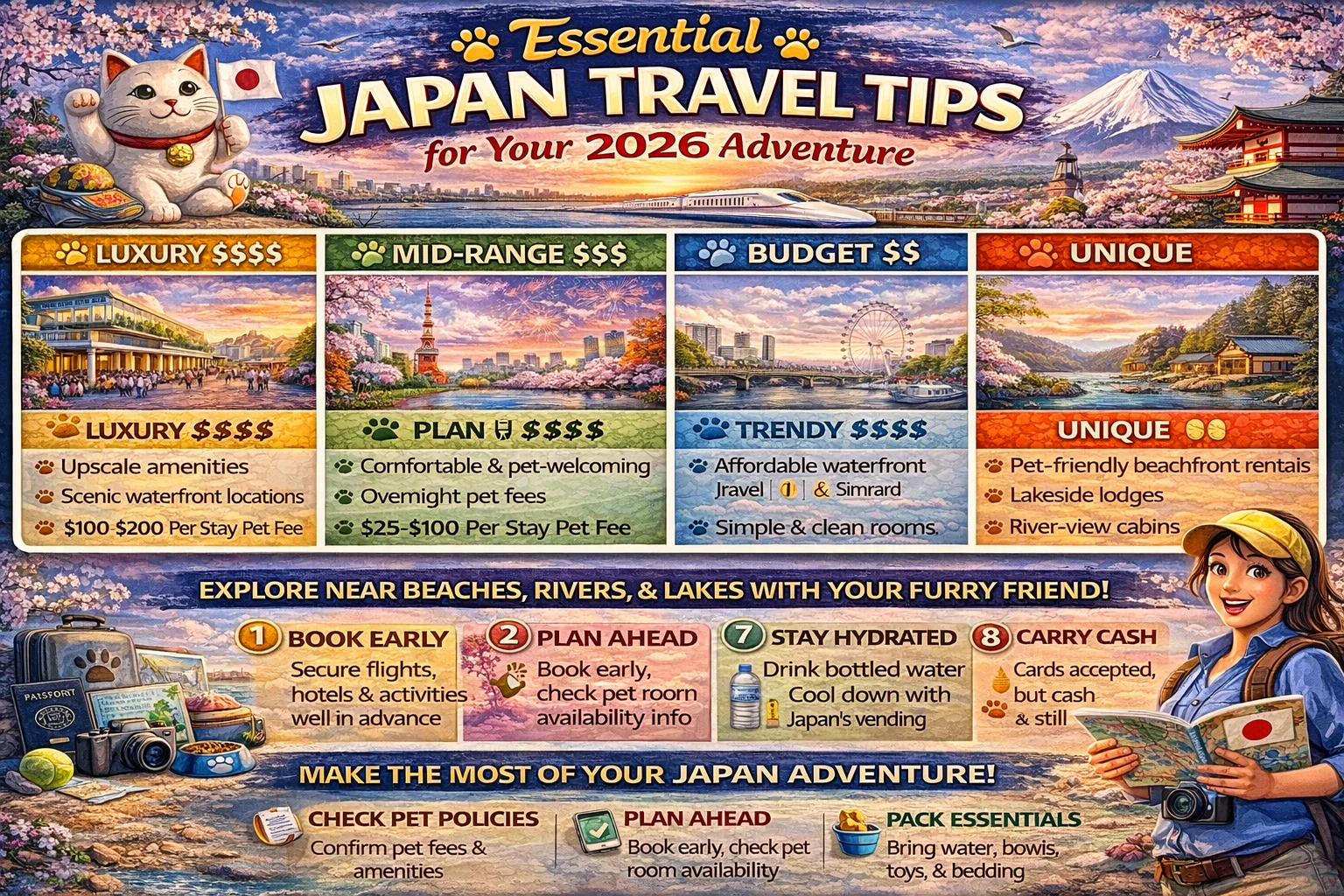
Planning a trip to Japan can feel overwhelming with its unique customs and logistics. These essential Japan travel tips will help you navigate the country like a pro, saving you time and stress. From mastering public transport to understanding cultural etiquette, a little preparation goes a long way. Let’s dive into the practical advice that will transform your 2026 journey into a seamless and deeply rewarding experience.
Japan Travel Tips for First-Timers and Repeat Visitors
1. Master the Rail System Before You Land
Japan’s rail network is a marvel of efficiency, but it can be daunting. For 2026 travel, purchase your Japan Rail (JR) Pass online well in advance. As of now, prices have increased, but it remains cost-effective for intercity travel. Download essential apps like Japan Travel by Navitime and Google Maps (set to transit mode) for real-time schedules and platform info. Remember, there are different train types: local (all stops), rapid, express, and the famous Shinkansen (bullet train). Your JR Pass covers most JR-operated lines, including many Shinkansen, but not the fastest “Nozomi” or “Mizuho” services on some routes. Always validate your pass at a JR ticket office before your first journey.
Best for: Travelers planning to visit multiple cities like Tokyo, Kyoto, and Osaka.
2. Embrace Cash (But Have a Card Backup)
While major cities are increasingly card-friendly, Japan is still largely a cash-based society. Many smaller restaurants, temples, markets, and ryokans (traditional inns) only accept cash. Always carry yen with you. The best way to get it is from 7-Eleven or Japan Post Office ATMs, which reliably accept foreign cards. Inform your bank of your travel plans to avoid blocks. Use your credit card for large department store purchases and hotel bills, but for daily spending, cash is king. Keep a small coin purse—you’ll accumulate lots of 100 and 500 yen coins.
Best for: Everyone, especially those venturing into rural areas or enjoying street food.
3. Secure Pocket Wi-Fi or an eSIM
Staying connected is non-negotiable for navigation, translations, and bookings. Renting a pocket Wi-Fi device or purchasing a Japan travel eSIM for your smartphone is a top Japan travel tip. You can arrange for pickup at the airport upon arrival or have it delivered to your first hotel. Services are fast, reliable, and often offer unlimited data. This is far more convenient and cost-effective than relying on sporadic public Wi-Fi or expensive international roaming plans from your home carrier.
Best for: Travelers needing constant connectivity for a group or multiple devices.
4. Learn Basic Etiquette and Phrases
A little cultural know-how earns respect. Key etiquette tips: don’t eat while walking, be quiet on trains, and always line up orderly. When entering a home, ryokan, or some restaurants, remove your shoes. Learn a few key phrases: “Arigatou gozaimasu” (Thank you), “Sumimasen” (Excuse me/Sorry), and “Onegaishimasu” (Please). Even a poorly pronounced attempt is appreciated. Tipping is not customary and can be considered rude; excellent service is the standard.
Best for: Culturally conscious travelers who want to show respect.
5. Book Accommodation and Key Experiences Early
Japan’s popularity isn’t waning. For 2026, book your hotels, ryokans, and especially sought-after experiences months in advance. This includes the Studio Ghibli Museum (tickets released on the 10th of the month prior), teamLab Borderless in Tokyo (reopening in 2026), popular kaiseki meals, and onsen ryokans in Hakone or Kyoto. Popular periods like cherry blossom season (late March-early April) and autumn foliage (November) require even more lead time.
Best for: Travelers with specific bucket-list items or visiting during peak seasons.
6. Understand Garbage Disposal
You’ll notice a distinct lack of public trash cans in Japan. Residents typically take their rubbish home. As a traveler, be prepared by carrying a small plastic bag in your daypack. Convenience stores (konbini) like 7-Eleven or FamilyMart sometimes have bins for customers. Recycling is taken seriously; look for separate bins for cans, plastic bottles, and burnable trash when you do find them.
Best for: Eco-conscious travelers who want to be tidy guests.
7. Get an IC Card for Local Transit
For all local subways and buses not covered by your JR Pass, an IC card (like Suica or Pasmo) is a lifesaver. You can buy and recharge them at any station vending machine. Simply tap on and off at train gates or when boarding/exiting buses. They’re also accepted for payment at many convenience stores, vending machines, and even some restaurants. It’s the ultimate tool for frictionless local travel.
Best for: City explorers using Tokyo Metro, Osaka Subway, or local buses.
8. Pack Light and Right
You’ll be navigating crowded trains, stations with stairs, and possibly compact hotel rooms. Packing light is one of the most practical Japan travel tips. Bring comfortable, easy-to-remove shoes for all the temple and home visits. Consider the season: humid summers require breathable clothing, while winters can be quite cold. Don’t forget a small towel or handkerchief, as many public restrooms don’t provide paper towels for hand drying.
Best for: Travelers planning to move between multiple cities.
9. Use Convenience Stores to Your Advantage
Japanese convenience stores (konbini) are incredible. They offer clean restrooms (ask politely with a “Sumimasen”), affordable and tasty meals (bento boxes, onigiri), hot coffee, ATMs, and printing/photocopy services. They are your reliable, 24/7 pit stop for anything you might need on the go. Trying different onigiri (rice balls) is a must-do culinary adventure in itself.
Best for: Budget travelers and anyone needing a quick, reliable resource.
10. Experience an Onsen or Sento Correctly
Visiting a hot spring (onsen) or public bath (sento) is a quintessential Japanese experience. The key rule: wash thoroughly at the shower stations before entering the shared bath. Do not bring your towel into the water; you can place it on your head or on the side. Be aware that tattoos can still be frowned upon or prohibited at many public onsens, though tattoo-friendly establishments are increasing. Check policies in advance or cover small tattoos with waterproof patches.
Best for: Travelers seeking authentic relaxation and cultural immersion.
11. Don’t Over-Schedule Your Days
Japan’s cities are dense, and travel between sights can take longer than it appears on a map. Avoid the temptation to cram too much into one day. Prioritize two or three key activities or neighborhoods and allow time to wander, get lost down side streets, and stumble upon hidden temples or local cafes. Some of the best memories come from unplanned discoveries.
Best for: Travelers who want to avoid burnout and experience serendipity.
12. Navigate Dining Like a Pro
Many restaurants use ticket vending machines at the entrance. You’ll see plastic food displays outside—point to what you want if there’s no English menu. It’s polite to say “Itadakimasu” before eating and “Gochisousama deshita” after. Slurping noodles is acceptable and shows you’re enjoying the meal. For a unique experience, try a standing sushi bar or a local izakaya (Japanese pub).
Best for: Foodies and adventurous eaters.
13. Handle Tax-Free Shopping Efficiently
Many department stores and large retailers offer tax-free shopping for visitors on consumables (like food) and general goods (like electronics) when you spend over 5,000 yen. You’ll need your passport. The store will either deduct the tax at checkout or you’ll pay the full price and get a refund at a dedicated counter. Your purchased items will be sealed in a special bag—do not open them until you’ve left Japan.
Best for: Shoppers looking for significant savings on high-value items.
14. Be Prepared for the Weather
Japan’s seasons are distinct. June-July is the rainy season (tsuyu), so pack a compact umbrella. Summers (July-August) are intensely hot and humid, especially in cities. Typhoon season runs into early autumn. Winters can bring significant snow to regions like Hokkaido and the Japanese Alps. Check the forecast before you go and pack accordingly with layers.
Best for: Travelers visiting for outdoor activities or seasonal attractions.
15. Download Helpful Translation Apps
While signs in major areas are bilingual, menus and information in smaller towns may not be. Apps like Google Translate (use the camera function for instant menu translation) and VoiceTra (for voice translation) are incredibly useful tools. They can help bridge the language gap in everyday situations, making your interactions smoother.
Best for: Travelers venturing off the beaten tourist path.
16. Respect Sacred Spaces
When visiting temples and shrines, observe quietly. At Shinto shrines, you may see a purification fountain: use the ladle to wash your left hand, then your right, and rinse your mouth (spit the water back onto the ground, not into the fountain). At temples, bow slightly before entering the main hall. Photography is often prohibited inside temple buildings—always look for signs.
Best for: Culturally and spiritually minded visitors.
Japan is a country that rewards the prepared traveler. By embracing these Japan travel tips, you’ll spend less time figuring out logistics and more time immersed in the incredible culture, cuisine, and scenery. The key is a blend of planning (for transport and major sights) and flexibility (to enjoy spontaneous moments). Your 2026 trip will be an unforgettable adventure where ancient tradition and hyper-modern innovation exist in perfect, fascinating harmony. Yoi tabi o! (Have a good trip!)
similar posts
The Ultimate Guide to the Best Time to Visit Switzerland in 2026
The Ultimate Guide to Pet Friendly Hotels Atlanta 2026: Where You and Your Furry Friend Will Love Staying
Where to Stay in Puerto Rico in 2026: The Ultimate Neighborhood & Hotel Guide
The Ultimate Guide to the Best Places to Visit in USA in 2026
15 Essential Travel Tips and Tricks for 2026: Save Money, Time, and Stress
The Ultimate Guide to the Best Pet Friendly Hotels in New Orleans Has to Offer in 2026