
15 Essential Travel Tips and Tricks for 2026: Save Money, Time, and Stress

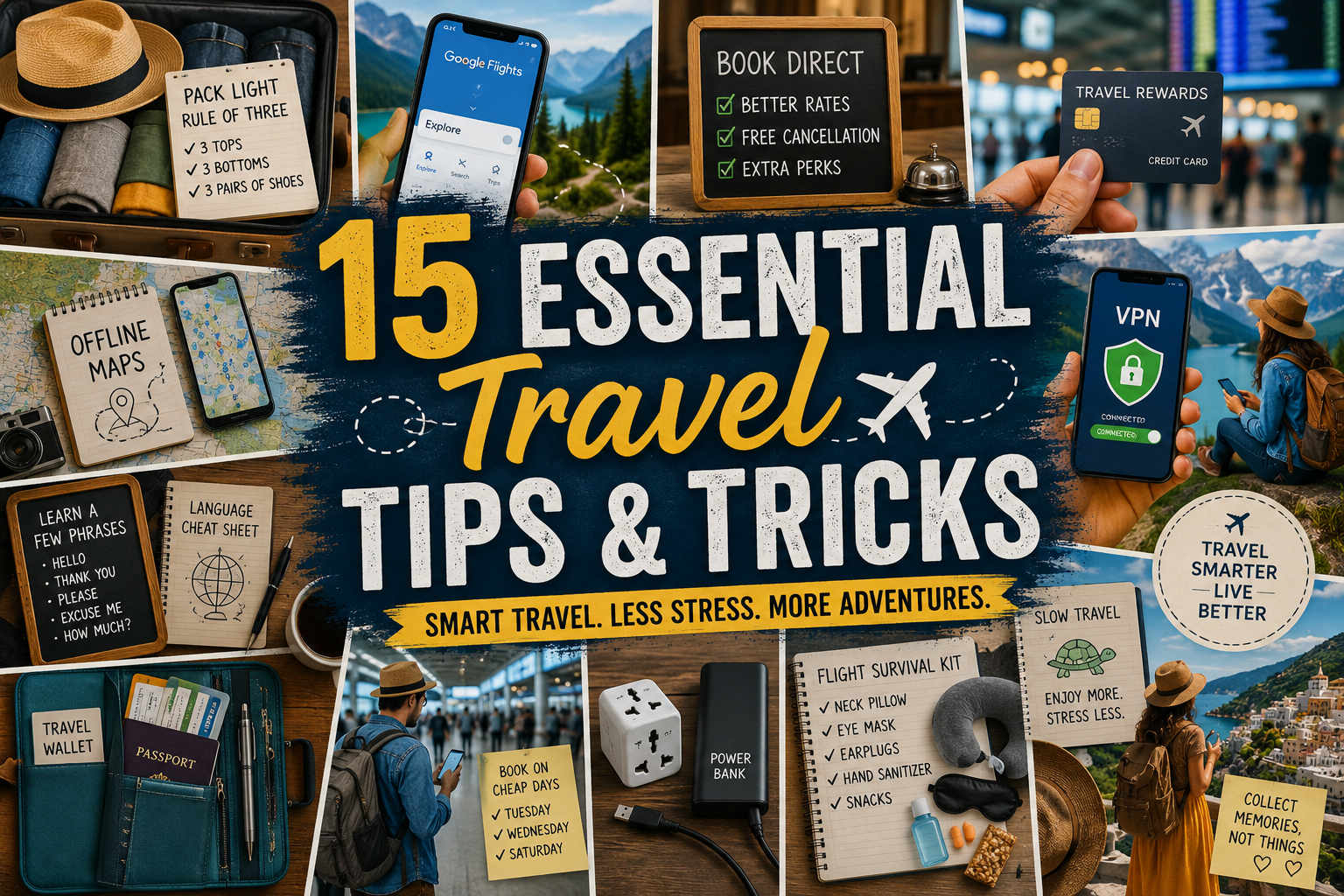
You’re staring at your packed suitcase, wondering if you’ve forgotten something crucial—or if you’re about to blow your budget on overpriced airport snacks. We’ve all been there. Whether you’re a first-time traveler or a seasoned globetrotter, these travel tips and tricks for 2026 will help you navigate airports, avoid common pitfalls, and make every trip smoother. From packing hacks to money-saving secrets, I’ve gathered the most practical advice from years on the road (and a few painful mistakes).
Why These Travel Tips and Tricks Will Transform Your Trips
Let’s face it: travel can be chaotic. But with the right travel tips and tricks, you can turn stress into spontaneity. In 2026, the travel landscape is shifting—think digital nomad visas, AI-powered trip planning, and sustainable travel trends. These strategies are designed to help you stay ahead of the curve, whether you’re backpacking through Southeast Asia or flying business class to Europe. Ready to level up your travel game? Let’s dive in.
1. Pack Light with the “Rule of Three”
Best for: Minimalist travelers and carry-on enthusiasts
Address: Your closet at home
Hours: Pack the night before your flight
Price: Free (saves baggage fees)
The golden rule? Only pack three tops, three bottoms, and three pairs of shoes for a week-long trip. Mix and match to create 15+ outfits. In 2026, airlines are cracking down on carry-on sizes, so a 40-liter backpack is your best friend. Roll your clothes instead of folding—it saves space and reduces wrinkles. Pro tip: Use packing cubes to separate dirty laundry from clean clothes. This isn’t just about saving space; it’s about avoiding the dreaded “overpacking regret” when you’re hauling a 50-pound suitcase up three flights of stairs in a historic hotel.
2. Use Google Flights’ “Explore” Feature
Best for: Budget-conscious travelers and spontaneous trip planners
Address: google.com/flights
Hours: 24/7 availability
Price: Free
Forget scrolling through dozens of booking sites. Google Flights’ “Explore” map shows you the cheapest destinations from your home airport. Set a price alert for your dream destination and wait for a deal. In 2026, this tool has become even smarter, predicting price drops with 90% accuracy. For example, I snagged a round-trip flight to Tokyo for $450 by booking on a Tuesday at 3 PM (historically the cheapest time). Combine this with incognito mode to avoid dynamic pricing—airlines track your search history and jack up prices.
3. Download Offline Maps Before You Go
Best for: Digital nomads and anyone without reliable Wi-Fi
Address: Google Maps app
Hours: Download before departure
Price: Free
You’re lost in a foreign city, your phone has 5% battery, and there’s no Wi-Fi in sight. Sound familiar? Download offline maps of your destination on Google Maps. You can navigate without data, save favorite spots, and even get walking directions. In 2026, offline maps now include real-time transit updates (when you sync before leaving). I once used this in Marrakech to find a hidden riad—without it, I’d still be wandering the medina. Bonus: Save your hotel’s location as a pinned marker for easy navigation.
4. Book Accommodations with Free Cancellation
Best for: Flexible travelers and trip planners
Address: Booking.com, Airbnb, or Hotels.com
Hours: Check cancellation policies before booking
Price: Usually 10-20% more than non-refundable rates
Life happens—flights get canceled, plans change, or you find a better deal. Always book accommodations with free cancellation up to 24-48 hours before check-in. In 2026, this is non-negotiable, especially with unpredictable weather patterns and airline strikes. Use filters on booking sites to show only free-cancellation options. I once saved $300 by canceling a non-refundable hotel when a storm hit Bali—but only because I had a backup plan. Pro tip: Book two hotels simultaneously (one refundable, one non-refundable) and cancel the loser later.
5. Use a Travel Rewards Credit Card
Best for: Frequent flyers and miles collectors
Address: Chase Sapphire Preferred, Capital One Venture, or Amex Gold
Hours: Apply 2-3 months before your trip
Price: $0-$550 annual fee (often waived first year)
In 2026, travel rewards cards are more competitive than ever. Look for cards with no foreign transaction fees, airport lounge access, and bonus points on travel purchases. I’ve earned enough points for two free flights to Europe just by using my card for everyday expenses. The key? Pay off the balance monthly to avoid interest. For beginners, the Chase Sapphire Preferred offers a 60,000-point bonus after spending $4,000 in three months—enough for a domestic round-trip flight.
6. Master the Art of “Slow Travel”
Best for: Culture seekers and burnout avoiders
Address: Any destination, but focus on one region
Hours: Spend at least 3-4 days per city
Price: Cheaper than rushing (fewer transport costs)
Rushing through five cities in seven days is a recipe for exhaustion. In 2026, slow travel is trending—spend a week in one place, rent an apartment, and live like a local. You’ll save money on transport, eat better (cook at home), and actually connect with the culture. I spent 10 days in Lisbon and discovered hidden fado bars that tourists miss. Slow travel also reduces your carbon footprint—fewer flights mean less emissions. Plus, you’ll have time for spontaneous adventures, like joining a local cooking class.
7. Use a VPN for Cheaper Flights and Hotels
Best for: Bargain hunters and privacy-conscious travelers
Address: NordVPN, ExpressVPN, or Surfshark
Hours: Activate before searching for deals
Price: $3-$12/month
Airlines and booking sites use your IP address to show higher prices based on your location. In 2026, this practice is even more sophisticated. Use a VPN to change your virtual location—for example, search for flights from a European IP to see lower prices. I saved $200 on a hotel in Paris by pretending to be in Germany. Pro tip: Clear your browser cookies or use incognito mode alongside the VPN for maximum savings.
8. Pack a “Flight Survival Kit”
Best for: Long-haul fliers and nervous travelers
Address: Your carry-on bag
Hours: Prep the night before
Price: $20-$50 (one-time investment)
Your flight survival kit should include: noise-canceling headphones, a neck pillow, snacks, a reusable water bottle (empty through security), and a portable charger. In 2026, many airlines charge for basic amenities like blankets and earplugs. I never board without my kit—it turns a 12-hour flight into a bearable experience. Add a sleep mask and melatonin for red-eye flights. Bonus: Pack a change of underwear and a toothbrush in case your luggage gets lost.
9. Learn 10 Key Phrases in the Local Language
Best for: Respectful travelers and culture enthusiasts
Address: Duolingo, Babbel, or YouTube
Hours: Practice 15 minutes a day for a week
Price: Free
“Hello,” “thank you,” “please,” “where is the bathroom?”—these phrases go a long way. In 2026, locals appreciate even clumsy attempts at their language. I once got a free dessert in Rome just by saying “grazie” with a smile. Use language apps like Duolingo (free) or Babbel (paid) for quick lessons. Pro tip: Download offline translations in case you lose signal. It’s not just polite—it’s practical for emergencies.
10. Use a “Travel Wallet” for Documents
Best for: Organized travelers and security-conscious individuals
Address: Amazon or travel stores
Hours: Buy before your trip
Price: $10-$30
Keep your passport, boarding passes, credit cards, and vaccination cards (still required in some countries in 2026) in one secure place. A travel wallet with RFID-blocking technology prevents digital theft. I use a slim one that fits in my front pocket—no bulky fanny packs. Pro tip: Make digital copies of all documents and email them to yourself. If you lose your wallet, you can still access your info.
11. Book Flights on “Cheap Days”
Best for: Budget travelers and advance planners
Address: Google Flights or Skyscanner
Hours: Book on Tuesdays or Wednesdays at 3 PM
Price: Save 10-30% on average
In 2026, airlines release new fares on Monday evenings, so competitors drop prices on Tuesday. Booking midweek (Tuesday or Wednesday) is statistically cheaper than weekends. I saved $150 on a flight to Thailand by waiting until Wednesday. Also, fly on weekdays—Tuesdays and Wednesdays are the least busy and cheapest days to travel. Use fare comparison tools to track price trends.
12. Use a “Digital Nomad” Visa for Long Stays
Best for: Remote workers and extended travelers
Address: Embassies or government websites
Hours: Apply 2-3 months before departure
Price: $100-$500 (varies by country)
If you work remotely, consider a digital nomad visa. In 2026, over 50 countries offer these, allowing you to stay 6-12 months without a tourist visa. Portugal, Thailand, and Croatia are popular options. I spent six months in Bali on a digital nomad visa—it cost $150 and let me avoid visa runs. Plus, you can open a local bank account and access healthcare. Check requirements carefully; some countries require proof of income ($2,000/month minimum).
13. Pack a Universal Adapter with USB-C
Best for: Tech-savvy travelers and gadget lovers
Address: Amazon or electronics stores
Hours: Buy before your trip
Price: $15-$30
In 2026, USB-C is the standard for most devices (laptops, phones, tablets). A universal adapter with multiple USB-C ports lets you charge everything at once. I use the “One World Adapter” by Ceptics—it works in 150+ countries and has surge protection. Avoid cheap adapters that can damage your devices. Pro tip: Bring a power strip with USB ports to charge multiple devices from one adapter.
14. Use “Travel Insurance” for Peace of Mind
Best for: All travelers, especially those on expensive trips
Address: World Nomads, SafetyWing, or Allianz
Hours: Buy within 14 days of booking your trip
Price: $30-$100 for a week-long trip
Travel insurance isn’t just for medical emergencies—it covers trip cancellations, lost luggage, and flight delays. In 2026, extreme weather events are more common, so insurance is a lifesaver. I once got $1,000 back when a hurricane canceled my Caribbean trip. Compare policies on sites like Squaremouth. For budget travelers, SafetyWing offers monthly plans starting at $45. Always read the fine print for exclusions (like pre-existing conditions).
15. Download “Offline Entertainment” for Downtime
Best for: Long flights, train rides, and layovers
Address: Netflix, Spotify, or Kindle app
Hours: Download before you leave Wi-Fi
Price: Free (with existing subscriptions)
You’re on a 10-hour flight with no Wi-Fi—what do you do? Download movies, podcasts, and e-books in advance. In 2026, Netflix allows downloads on up to 10 devices per account. I always have a few episodes of a comfort show (like The Office) saved. Pro tip: Download a language learning podcast for the destination you’re visiting—it’s productive and entertaining.
16. Use “Meetup” Apps for Local Connections
Best for: Solo travelers and social butterflies
Address: Meetup, Couchsurfing, or Facebook Groups
Hours: Search a week before your trip
Price: Free
Traveling alone? Use apps like Meetup to find local events—hiking groups, language exchanges, or food tours. In 2026, these platforms are more popular than ever. I joined a free walking tour in Prague through Meetup and made friends from three different countries. Pro tip: Couchsurfing’s “Hangouts” feature lets you meet travelers in real-time without staying with a host. Always meet in public places and trust your gut.
Conclusion
Traveling in 2026 doesn’t have to be stressful or expensive. With these travel tips and tricks, you’ll save money, avoid common mistakes, and enjoy richer experiences. Remember: pack light, book smart, and always have a backup plan. The best trips aren’t the most extravagant—they’re the ones where you feel prepared and open to spontaneity. So go ahead, book that flight, and explore the world with confidence. Safe travels!
similar posts
The Ultimate Guide to the Best Time to Visit Switzerland in 2026
The Ultimate Guide to Pet Friendly Hotels Atlanta 2026: Where You and Your Furry Friend Will Love Staying
Where to Stay in Puerto Rico in 2026: The Ultimate Neighborhood & Hotel Guide
The Ultimate Guide to the Best Places to Visit in USA in 2026
The Ultimate Guide to the Best Pet Friendly Hotels in New Orleans Has to Offer in 2026
The Ultimate Guide to Pet Friendly Hotels in Santa Barbara (2026 Edition)