
17 International Travel Tips for a Smooth 2026 Adventure

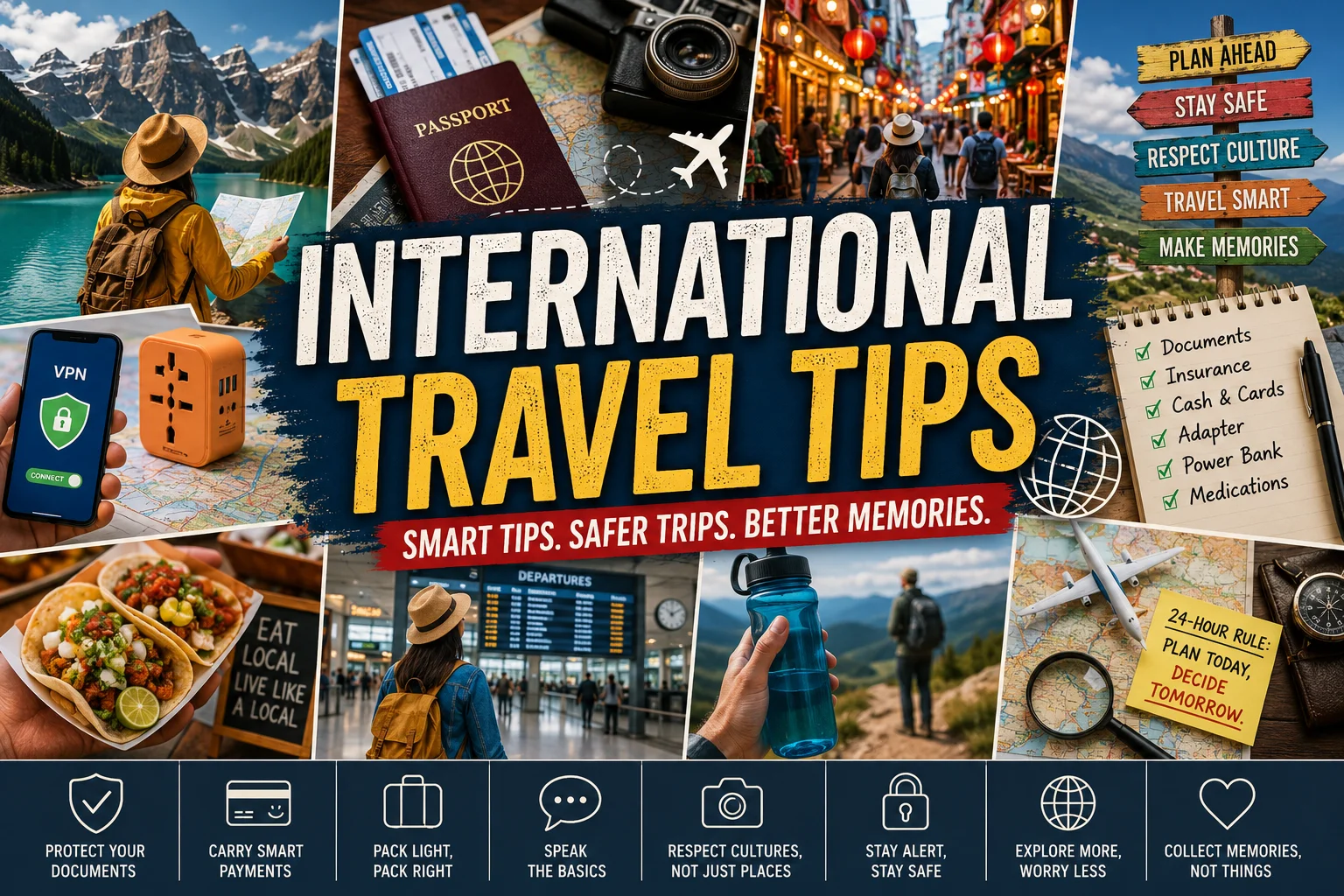
You’re probably dreaming of your next big trip abroad but feeling a little overwhelmed by all the logistics, packing, and planning. I’ve got you covered with these international travel tips that will save you time, money, and headaches. Whether you’re a first-time globetrotter or a seasoned explorer, this guide is packed with practical advice to make your 2026 journey unforgettable—for all the right reasons.
Why These International Travel Tips Will Transform Your Trip
Let’s face it: traveling internationally in 2026 comes with its own set of challenges, from evolving entry requirements to tech-savvy scams. But with the right strategies, you can navigate airports, neighborhoods, and foreign currencies like a pro. These international travel tips are designed to help you avoid common pitfalls, save money, and maximize every moment of your adventure.
1. Always Carry a Digital and Physical Copy of Your Documents
Best for: All travelers, especially those visiting countries with strict entry rules
Address: Your phone’s cloud storage and a secure travel wallet
Hours: Accessible 24/7—but check local embassy hours for emergencies
Price: Free for digital copies; $10–$20 for a travel wallet
Before you even step foot on a plane, scan your passport, visa, and travel insurance documents. Store them in a secure cloud service (like Google Drive) and email them to yourself. I also recommend keeping a physical copy in a separate bag from your originals. Why? If your wallet gets stolen or your phone dies, you’ll still have backup. In 2026, many countries require proof of onward travel or vaccination records, so having these handy can save you from being denied boarding.
2. Notify Your Bank and Credit Card Companies
Best for: Anyone using cards abroad
Address: Your bank’s app or customer service line
Hours: Do this at least 1–2 weeks before departure
Price: Free, but watch for foreign transaction fees (typically 1–3%)
Nothing kills a travel buzz like your card being frozen in a foreign country. Call your bank or use their app to set a travel notice for your destination. I’ve learned the hard way that some banks automatically block international transactions, even if you’ve used your card abroad before. For 2026, consider getting a card with no foreign transaction fees—like the Chase Sapphire Preferred or Capital One Venture—to avoid extra costs.
3. Pack a Universal Adapter and Power Bank
Best for: Tech-dependent travelers
Address: Amazon or any electronics store
Hours: Buy before you leave
Price: $15–$30 for a universal adapter; $20–$50 for a power bank
You’ll be surprised how many travelers forget this simple item. A universal adapter ensures you can charge your phone, laptop, and camera in any country. In 2026, many airports and hotels have USB-C ports, but don’t rely on them. I always pack a 10,000mAh power bank for long layovers or day trips—it’s a lifesaver when your phone dies and you need maps or translation apps.
4. Learn a Few Key Phrases in the Local Language
Best for: Immersive travelers
Address: Duolingo, Google Translate, or local language apps
Hours: Practice 10 minutes daily for a month
Price: Free for basic apps; $10–$20 for premium versions
You don’t need to be fluent, but knowing “hello,” “thank you,” and “where is the bathroom?” goes a long way. Locals appreciate the effort, and it often leads to better service or even insider tips. For 2026, use Google Translate’s offline feature—download the language pack before you go—so you’re not stuck without data. I once got a free dessert in Rome just for saying “grazie” with a smile.
5. Buy Travel Insurance—Seriously, Do It
Best for: Anyone who values peace of mind
Address: World Nomads, SafetyWing, or your credit card’s travel insurance
Hours: Purchase before your trip starts
Price: $30–$100 for a week-long trip
Travel insurance is non-negotiable in 2026. It covers medical emergencies, trip cancellations, lost luggage, and even evacuation. I’ve seen friends lose thousands because they skipped it. Look for policies that include COVID-19 coverage, as some countries still require it. Compare plans on sites like Squaremouth to find the best deal for your itinerary.
6. Use a VPN for Online Security
Best for: Digital nomads and privacy-conscious travelers
Address: NordVPN, ExpressVPN, or Surfshark
Hours: Install before departure
Price: $3–$12 per month
Public Wi-Fi in airports, cafes, and hotels is a hacker’s playground. A VPN encrypts your internet connection, protecting your passwords and banking info. In 2026, some countries (like China and Turkey) block certain websites, so a VPN also helps you access Google, WhatsApp, or social media. I never travel without NordVPN—it’s fast and easy to use.
7. Master the Art of Light Packing
Best for: Carry-on-only travelers
Address: Your closet and a compact suitcase
Hours: Pack the night before
Price: Free (less luggage fees)
Overpacking is the most common travel mistake. Stick to a capsule wardrobe: mix-and-match outfits, one pair of comfortable shoes, and a lightweight jacket. In 2026, many airlines charge for checked bags, so aim for a carry-on. I use packing cubes to compress clothes and stay organized. Remember, you can always buy toiletries or a sweater at your destination.
8. Download Offline Maps and Translation Apps
Best for: Explorers who wander without data
Address: Google Maps, Maps.me, or Citymapper
Hours: Download before you leave
Price: Free
Data roaming can be expensive, and Wi-Fi isn’t always available. Download offline maps of your destination—Google Maps lets you save areas to your phone. For translations, use Google Translate’s offline mode. In 2026, some cities have free public Wi-Fi, but don’t count on it. I once got lost in Tokyo with no signal, and offline maps saved my day.
9. Research Local Customs and Dress Codes
Best for: Respectful travelers
Address: Travel blogs, government websites, or guidebooks
Hours: Spend an hour before your trip
Price: Free
What’s acceptable in New York might offend in Dubai. In 2026, many countries still have strict dress codes for religious sites (like temples in Thailand or churches in Italy). Research tipping etiquette, hand gestures, and dining customs. For example, in Japan, it’s rude to tip, while in the U.S., it’s expected. A little research shows respect and helps you avoid awkward moments.
10. Keep a Digital Detox Day
Best for: Burned-out travelers
Address: Any quiet spot—a park, beach, or cafe
Hours: One full day during your trip
Price: Free
Travel can be exhausting, especially with constant planning and social media updates. Schedule a day without your phone—no maps, no Instagram, no emails. Just wander, read a book, or people-watch. In 2026, the trend of “slow travel” is growing, and this practice helps you truly connect with your destination. I did this in Barcelona and stumbled upon a hidden market I would’ve missed otherwise.
11. Use a Money Belt or Hidden Pouch
Best for: Budget travelers and city explorers
Address: Amazon or travel stores
Hours: Wear it daily in crowded areas
Price: $10–$25
Pickpocketing is a reality in popular tourist spots like Paris, Rome, and Bangkok. A money belt under your clothes or a hidden pouch inside your jacket keeps your cash and passport safe. In 2026, RFID-blocking versions are essential to protect against digital theft. I never leave home without my Travelon money belt—it’s slim and comfortable.
12. Book Accommodation with Free Cancellation
Best for: Flexible travelers
Address: Booking.com, Expedia, or Airbnb
Hours: Book at least 2–3 weeks in advance
Price: Varies by property
Plans change—flights get delayed, you fall in love with a city and want to stay longer. Free cancellation gives you flexibility without penalty. In 2026, many hotels offer this option, but always read the fine print. I once saved $200 by canceling a hotel in Lisbon when I found a better deal last minute.
13. Try Street Food for Authentic Experiences
Best for: Foodie adventurers
Address: Local markets or street stalls
Hours: Lunch or early dinner (less crowded)
Price: $2–$10 per dish
Street food is often the most authentic (and cheapest) way to experience local cuisine. In 2026, food safety is better than ever, but still use common sense: choose stalls with long lines, fresh ingredients, and high turnover. I’ve had the best tacos in Mexico City and the most amazing pho in Hanoi from street vendors. Just avoid raw or undercooked items if you have a weak stomach.
14. Stay Hydrated with a Reusable Water Bottle
Best for: Eco-conscious travelers
Address: Any outdoor or travel store
Hours: Fill up at airport water fountains or hotel sinks
Price: $10–$30
Single-use plastic bottles are wasteful and expensive. In 2026, many airports and cities have water refill stations. Bring a collapsible or insulated bottle—it saves money and reduces your environmental footprint. I use a Lifestraw bottle, which filters water, so I can drink from taps in countries where it’s not recommended.
15. Use Local SIM Cards or eSIMs
Best for: Connected travelers
Address: Airport kiosks or online providers like Airalo
Hours: Activate upon arrival
Price: $10–$30 for a week of data
Roaming charges can be astronomical. In 2026, eSIMs are the most convenient option—you can buy and install them before you leave, and they work instantly. For longer trips, buy a local SIM card at the airport. I’ve used Airalo in over 20 countries, and it’s always been reliable.
16. Practice the 24-Hour Rule for Major Decisions
Best for: Impulsive travelers
Address: Any situation—booking flights, extending stays, or buying souvenirs
Hours: Wait 24 hours before committing
Price: Free (saves money)
Travel can make you impulsive—you see a cheap flight or a beautiful rug and want to buy it immediately. The 24-hour rule gives you time to think rationally. In 2026, many airlines allow free cancellations within 24 hours, so use that window. I once almost booked a $1,000 flight to Iceland on a whim, but after a night’s sleep, I found a better deal for half the price.
Conclusion
Traveling internationally in 2026 doesn’t have to be stressful. With these international travel tips, you’ll be prepared for anything—from lost luggage to language barriers. Remember, the goal is to enjoy the journey, not just the destination. Pack light, stay safe, and embrace the unexpected. Now go book that trip—you’ve got this!
similar posts
The 15 Best Places to Visit in Spain in 2026
15 Best Places to Visit in Colorado in 2026
Where to Stay in Yosemite: The 2026 Insider’s Guide to Valley Floor Lodging & Beyond
The Best Pet Friendly Hotels in San Diego (2026)
The Best Travel Tips Websites for 2026: Your Ultimate Guide
The Ultimate Guide to Where to Stay in Charleston SC in 2026