
Your Ultimate Guide to Solo Travel in 2026: 16 Tips for an Unforgettable Adventure

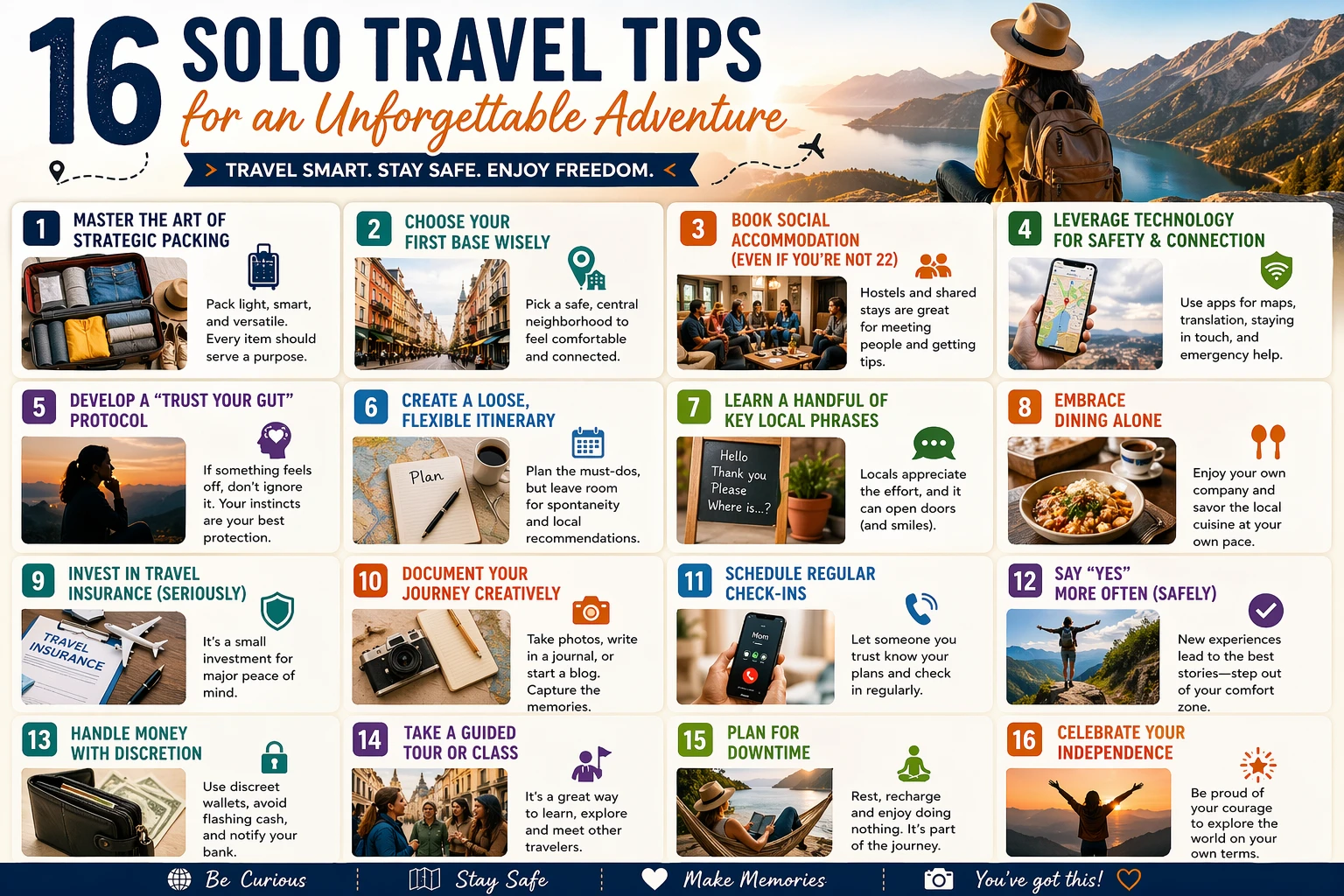
Solo travel can feel daunting, filled with questions about safety, loneliness, and logistics. This guide provides the essential tips for solo travel to transform your apprehension into excitement. Traveling alone in 2026 is more accessible and rewarding than ever, offering unparalleled freedom and self-discovery. With the right preparation and mindset, you can craft a journey that’s uniquely yours.
Essential Tips for Solo Travel Success
1. Master the Art of Strategic Packing
Packing light isn’t just a suggestion for solo travel; it’s a superpower. Navigating a new city alone is infinitely easier with one manageable carry-on bag. For 2026, invest in versatile, tech-friendly gear like moisture-wicking layers, a universal adapter with multiple USB-C ports, and a secure, cross-body anti-theft bag. Always pack a portable power bank and a physical backup of important documents. The golden rule: lay out everything you think you need, then halve it. You’ll thank yourself when you’re effortlessly hopping on a local bus or climbing four flights of stairs to a charming guesthouse.
Best for: The efficient, minimalist traveler who values mobility over outfit options.
2. Choose Your First Base Wisely
Your inaugural solo destination sets the tone. In 2026, consider locations known for their solo-travel infrastructure—think reliable public transport, a reputation for safety, and vibrant social hostels or co-living spaces. Cities like Lisbon, Portugal, or Taipei, Taiwan, are perennial favorites, but also look at emerging spots like Ljubljana, Slovenia, or Busan, South Korea. Start in a place where you can build confidence with easy day trips and a built-in community of fellow travelers. Avoid overly remote or logistically complex destinations for your first go; you can always graduate to those.
Best for: First-time solo travelers building confidence and seeking a supportive entry point.
3. Book Social Accommodation (Even If You’re Not 22)
Gone are the days when hostels were just for the young and budget-conscious. In 2026, the accommodation landscape for solo travelers is rich with options. Boutique hostels often have private rooms, organized social events (like free walking tours or family-style dinners), and co-working spaces. Platforms like Hostelworld have detailed filters for atmosphere. Alternatively, look for highly-rated guesthouses or small hotels with communal breakfast areas—these are natural conversation starters. I’ve met some of my best travel friends over a shared pot of coffee in a B&B kitchen.
Best for: Travelers looking to easily meet like-minded people without sacrificing comfort.
4. Leverage Technology for Safety & Connection
Your smartphone is your most vital solo travel tool. Beyond maps and translation apps, use technology proactively for safety. Share your live location with a trusted friend or family member back home using WhatsApp or Google Maps. Download offline maps and city guides before you arrive. For 2026, explore apps like SoloTraveller (a hypothetical, curated meet-up app) or Meetup for local events. Also, research and save the local emergency number and the address of your country’s embassy on your phone before you depart.
Best for: The connected traveler who uses tech to enhance safety and social opportunities.
5. Develop a “Trust Your Gut” Protocol
This is the most important non-negotiable tip. Solo travel sharpens your intuition. If a situation, person, or street feels off, leave immediately. Don’t worry about being polite. Have a ready-made exit strategy: know the name of a well-lit, public cafe or bar you can duck into, or always have funds for a taxi ride back to your accommodation. In 2026, with more options for verified ride-sharing, use official apps rather than hailing unmarked cars. Your internal alarm system is your best travel companion—listen to it.
Best for: Every solo traveler, without exception. Safety first, always.
6. Create a Loose, Flexible Itinerary
The joy of solo travel is answering to no one’s schedule but your own. Plan a skeleton framework: book your first few nights’ accommodation and maybe one or two must-do activities in advance. Leave the rest open. Found an amazing local market? Spend the day there. Met a group going on a day trip? Join them. This flexibility allows for spontaneous adventures and prevents burnout from an over-packed schedule. Use a simple notes app to keep a running list of possibilities you discover along the way.
Best for: The free spirit who craves spontaneity and hates being tied to a rigid plan.
7. Learn a Handful of Key Local Phrases
Even a basic effort in the local language goes a massively long way. Before you arrive, learn how to say: “Hello,” “Thank you,” “Please,” “Sorry,” “How much?” and “Help.” In 2026, translation earbuds will be more common, but the human connection of attempting the language is irreplaceable. It shows respect, often leads to warmer interactions, and can help you out of a pinch. Use apps like Duolingo or Memrise for a few weeks of fun practice before your trip.
Best for: Travelers who want to connect authentically with local culture and people.
8. Embrace Dining Alone
For many, this is the biggest solo travel hurdle, but it can become a true pleasure. Start by choosing a cafe for breakfast or lunch, perhaps with a book or journal. For dinner, sit at the bar or a communal table—it’s less intimidating and often leads to conversation with staff or other diners. In 2026, look for restaurants with counter seating or those featured on apps like Eatwith, which connects you to local home dinners. Remember, no one is scrutinizing you; they’re focused on their own meals and company.
Best for: Foodies learning to savor their own company and the culinary experience.
9. Invest in Travel Insurance (Seriously)
This is not an area to cut corners. A comprehensive travel insurance policy for 2026 should cover medical emergencies, evacuation, trip cancellation/interruption, and lost luggage. When you’re alone, a minor incident like a sprained ankle or a stolen passport becomes a major logistical headache. Insurance provides a safety net and peace of mind. Read the fine print, ensure it covers any planned activities (e.g., hiking, scuba diving), and carry both digital and physical copies of your policy.
Best for: The prudent traveler who understands that preparation prevents panic.
10. Document Your Journey Creatively
Solo travel creates powerful memories. Find a way to document them beyond standard photos. Keep a brief journal, start a private blog, or use a voice memo app to record your thoughts in the moment. In 2026, consider lightweight vlogging or a photo-a-day project. This practice not only preserves memories but also helps you process your experiences. Sharing selectively on social media can also keep loved ones updated and might inspire others to take the leap.
Best for: The reflective traveler and storyteller who wants to capture the journey’s essence.
11. Schedule Regular Check-Ins
Establish a simple routine for touching base with someone at home. It could be a daily “I’m safe” text when you get back to your room or a weekly video call. This creates a safety net—if you miss a check-in, someone knows to be concerned. It also alleviates worries for your friends and family, making your solo adventure less stressful for them. Use secure Wi-Fi or a local SIM/eSIM card (a must-have for 2026) to stay reliably connected.
Best for: Providing peace of mind—for both you and your loved ones back home.
12. Say “Yes” More Often (Safely)
Within the bounds of safety and comfort, push yourself to accept invitations. Said yes to joining a group for sunset drinks? Great. Accepted a recommendation for a hidden temple from a shopkeeper? Wonderful. This mindset opens doors to unexpected friendships and experiences you’d never find in a guidebook. The shared camaraderie of the road is a unique aspect of solo travel; be open to it. Balance this with Tip #5—your gut is the final judge.
Best for: Travelers looking to break out of their shell and embrace serendipity.
13. Handle Money with Discretion
Carry a mix of payment methods: a primary travel credit card with no foreign transaction fees, a backup card, and a small amount of local cash. Use a money belt or a hidden pouch for emergency cash and your passport backup, but use a separate, accessible wallet for daily spending. In 2026, contactless and digital wallet payments will be ubiquitous, but always have a cash backup. Never flash large amounts of money in public, and use ATMs inside banks during daylight hours when possible.
Best for: The financially savvy traveler who plans for security and convenience.
14. Take a Guided Tour or Class
Joining a small-group tour, cooking class, or photography walk is a fantastic way to break the ice. You instantly have something in common with the group, and it structures your day around a shared interest. In 2026, look for experiences on platforms like Withlocals or Viator that cater to small groups. It’s a low-pressure way to learn something new, see a place through an expert’s eyes, and potentially make friends for the rest of your trip.
Best for: Travelers seeking structured social interaction and deeper cultural immersion.
15. Plan for Downtime
Solo travel can be socially and sensory overwhelming. It’s not only okay but essential to schedule quiet time. A slow morning in your accommodation, an afternoon reading in a park, or a solo movie night are all valid and recharging. Listen to your energy levels. This downtime is when you decompress and absorb your experiences, preventing travel fatigue. Don’t feel guilty for not being “on” 24/7.
Best for: Introverts and anyone who needs to recharge to fully enjoy their adventures.
16. Celebrate Your Independence
At the end of each day, acknowledge your wins—big and small. You navigated a new subway system, ordered a meal successfully, or simply enjoyed your own fantastic company. Solo travel is a profound confidence-builder. Keep a note in your phone of these little victories. They are the true souvenirs of your journey, proof of your capability and resilience, long after the trip ends.
Best for: Every solo traveler as a daily practice in self-appreciation and growth.
Conclusion
Solo travel in 2026 is an invitation to write your own story, on your own terms. These tips for solo travel are designed to equip you with practical know-how and the confidence to embrace the journey’s unpredictable beauty. The challenges become your most treasured lessons, and the freedom is utterly addictive. Start planning, pack your bags, and get ready to discover not just new places, but a stronger, more capable version of yourself. The world is waiting for you—alone, together.
similar posts
The Ultimate Guide to the Best Time to Visit Switzerland in 2026
The Ultimate Guide to Pet Friendly Hotels Atlanta 2026: Where You and Your Furry Friend Will Love Staying
Where to Stay in Puerto Rico in 2026: The Ultimate Neighborhood & Hotel Guide
The Ultimate Guide to the Best Places to Visit in USA in 2026
15 Essential Travel Tips and Tricks for 2026: Save Money, Time, and Stress
The Ultimate Guide to the Best Pet Friendly Hotels in New Orleans Has to Offer in 2026