
The Ultimate Guide to the Best Time to Visit Thailand in 2026

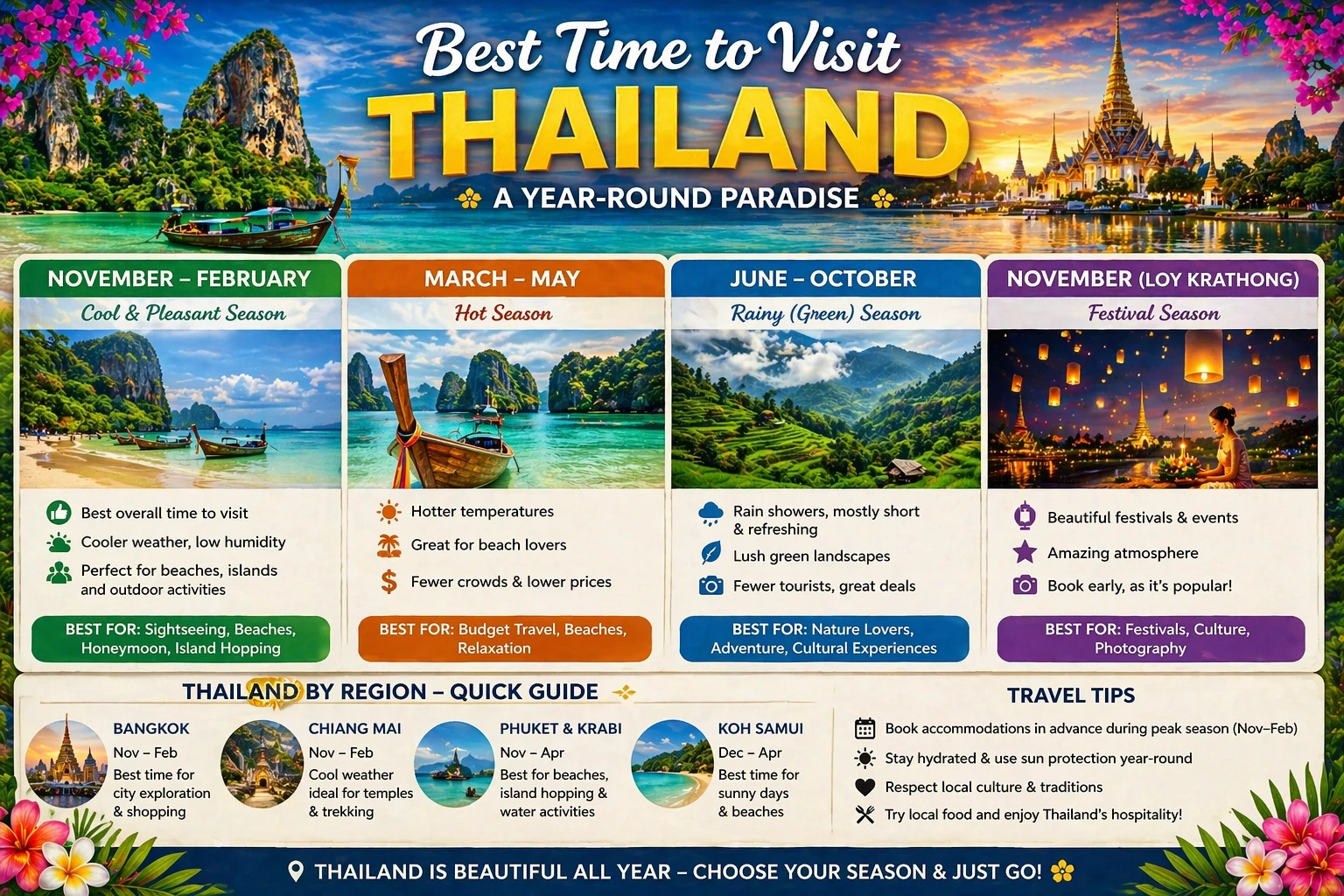
Planning a trip to Thailand but worried about monsoon rains or scorching heat? You want to know the perfect window for your dream vacation. The best time to visit Thailand is generally from November to early April, during the cool, dry season. However, the ideal timing truly depends on which regions you visit and what experiences you’re seeking, from full moon parties to misty mountain retreats.
The Best Time to Visit Thailand: A Seasonal Breakdown
Thailand’s weather is ruled by three distinct seasons: the cool/dry season, the hot season, and the rainy season. While the classic advice is to visit in the cool season, each period offers unique advantages for different types of travelers. Your perfect trip hinges on aligning your priorities—be it beach weather, festival culture, budget, or crowd avoidance—with the right season and region.
1. Peak Season: Cool & Dry (November to February)
Best for: First-time visitors, beach lovers, and festival-goers.
This is Thailand’s premier tourist season for excellent reason. The weather is near-perfect nationwide, with lower humidity, comfortable temperatures (averaging 75-90°F), and minimal rainfall. It’s the ideal time for island-hopping in the Andaman Sea (Phuket, Krabi), exploring Bangkok’s temples, and trekking in the north. The clear skies make for stunning sunsets and photography. The major trade-off is that this is the most crowded and expensive time. Key festivals like Loy Krathong (usually November) and Chinese New Year (late January/February) occur during this period, adding cultural magic but also higher prices. Book flights and hotels well in advance for this period in 2026.
Best for: First-time visitors, beach lovers, families, and festival enthusiasts who don’t mind crowds.
2. Shoulder Season: Hot & Dry (March to June)
Best for: Sun worshippers, budget travelers, and snorkelers.
Temperatures soar during these months, especially in April, which is often the hottest month. It’s a fantastic time for beach vacations in the Gulf of Thailand (Koh Samui, Koh Phangan, Koh Tao), as the sea is calm and visibility for diving is superb. The infamous Songkran Festival (Thai New Year, April 13-15) is a major highlight—a nationwide, joyous water fight offering a uniquely Thai experience. Prices and crowds begin to dip after Songkran, making late May and June a sweet spot for value. Just be prepared for intense heat, stay hydrated, and plan outdoor activities for early mornings or late afternoons.
Best for: Party-goers (Songkran), dedicated beach bums, scuba divers, and travelers seeking lower prices post-April.
3. Low Season: Rainy & Green (July to October)
Best for: Budget-conscious travelers, nature lovers, and surfers.
Don’t let the “rainy season” label scare you off. While the southwest monsoon brings daily downpours, they are often short, intense bursts in the afternoon, leaving mornings sunny and landscapes incredibly lush and green. This is the most affordable time to visit, with significant hotel discounts and fewer tourists. It’s an excellent time for cultural exploration in cities and the north. On the east coast (Koh Samui archipelago), the weather is often better from June to August. In places like Phuket, surfable waves arrive. Just be mindful of potential travel disruptions on islands in the Andaman Sea during peak storm months (September-October).
Best for: Backpackers, photographers, surfers, and travelers who prioritize value and don’t mind sporadic rain.
4. For Beach Hopping in the Andaman Sea (Phuket, Krabi, Phi Phi)
Best for: Island paradises and limestone karst views.
The Andaman Coast on the southwest has a very distinct pattern. The absolute best time is from November to April. During these months, you’ll get postcard-perfect conditions: endless sunshine, calm, turquoise waters perfect for boat trips to Maya Bay, and ideal beach weather. The monsoon hits here strongly from May to October, with the roughest seas and heaviest rainfall from September to October, when many boat tours cease and some island resorts close. For reliable beach time, stick to the peak season.
Best for: Travelers who want guaranteed sunny beach days and smooth sailing for island tours.
5. For the Gulf Islands (Koh Samui, Koh Phangan, Koh Tao)
Best for: Full Moon parties and diving certifications.
These islands in the Gulf of Thailand operate on a slightly different calendar. Their best weather typically runs from January to August, with a peak of heat and dryness around June to August. This makes them a perfect summer escape when the Andaman coast is wet. The rainy season here is most pronounced from October to December. This is crucial to know if you’re planning for the Full Moon Party on Koh Phangan—check the calendar for 2026, but parties are year-round, with the driest, most comfortable ones occurring between January and August.
Best for: Diving students, Full Moon Party attendees, and those visiting in the European summer.
6. For Cultural Exploration in Bangkok & Central Plains
Best for: Temple touring and urban adventures.
Bangkok is a year-round destination, but the most pleasant time for extensive temple-hopping (Wat Arun, Grand Palace) and market exploration is during the cool season (Nov-Feb). The hot season (Mar-May) can be brutally humid for outdoor activities. The rainy season (Jun-Oct) brings relief from heat but can involve navigating sudden downpours; however, it’s a great time to visit museums and enjoy indoor attractions. The city’s vibrant life and incredible food scene are constant, regardless of the weather.
Best for: City slickers and culture vultures who can adapt their plans based on the daily forecast.
7. For Trekking in Northern Thailand (Chiang Mai, Pai)
Best for: Mountain scenery and hill tribe culture.
The north experiences cooler temperatures than the south, especially in the mountains. The best time for trekking is the cool, dry season (Nov-Feb), when days are clear and nights are crisp, even cold in higher elevations. The burning season (roughly late February to early April) is the worst time to visit, as agricultural fires lead to severe air pollution that can obscure views and cause health issues. The rainy season (May-Oct) brings lush, green scenery but leeches on trails and potential disruptions. For clear skies and clean air, target November or December.
Best for: Hikers, nature enthusiasts, and travelers seeking cooler climates.
8. For Avoiding Crowds & Finding Deals
Best for: Savvy solo travelers and couples.
If your top priorities are lower prices and thinner crowds, target the shoulder months of late April to early June (after Songkran) and the rainy season (July-October, excluding local holidays). You’ll find hotel rates can be 30-50% lower, and you won’t have to fight for space at major attractions like Wat Pho or Railay Beach. Just come with flexibility, a rain jacket, and the understanding that some remote island services may be limited, especially in September and October.
Best for: Budget backpackers, solo travelers, and anyone who dislikes crowded tourist spots.
9. For Experiencing Major Thai Festivals
Best for: Cultural immersion and photography.
Thailand’s festival calendar is a major draw. To plan around them:
* Songkran (Mid-April): The world’s biggest water fight. Be prepared to get wet for 3 days straight! It’s hot season, so it’s welcome.
* Loy Krathong (Usually November): A magical festival of lights where decorated baskets are floated on water. Chiang Mai’s Yi Peng, with lantern releases, is spectacular.
* Vegetarian Festival (October): A shocking and fascinating event, particularly in Phuket, involving ritual piercings and firewalking.
Plan well ahead, as accommodation fills up and prices skyrocket for these periods in 2026.
Best for: Festival lovers, photographers, and travelers seeking deep cultural connection.
10. For Diving & Snorkeling Enthusiasts
Best for: Underwater explorers.
Thailand offers world-class diving, but timing is region-specific.
* Andaman Sea (Similan Islands, Richelieu Rock): The season is short and sweet: mid-October to mid-May. Liveaboards operate in this window, with peak visibility from December to April.
* Gulf of Thailand (Koh Tao, Sail Rock): Diving is good year-round, but the best conditions are from June to September, when the Andaman is closed. Koh Tao is a famous (and affordable) place to get certified any time of year.
Best for: Scuba divers, snorkelers, and marine life enthusiasts.
11. The “Green Season” Secret (July-September)
Best for: Landscape photographers and eco-tourists.
This period, especially in the north and northeast, transforms Thailand into a verdant paradise. Rice paddies are emerald green, waterfalls are at their most powerful, and the air is clean and fresh after rains. The countryside is stunningly beautiful. It’s an exceptional time for visiting national parks like Khao Yai or Erawan. While you’ll encounter rain, it often follows a predictable pattern of sunny mornings and afternoon showers, allowing you to plan your days effectively.
Best for: Photographers, nature lovers, and travelers who appreciate dramatic landscapes over guaranteed sunshine.
12. When Not to Visit: Key Considerations
Best for: Informed planners avoiding downsides.
A few periods require extra caution:
* Burning Season in the North (Feb-Apr): Chiang Mai and Chiang Rai often top global pollution charts. Avoid if you have respiratory issues.
* Peak Monsoon in Andaman (Sep-Oct): Heavy seas can cancel ferries and tours; some islands shut down.
* Major Holiday Weeks (Dec-Jan, Songkran): Domestic travel surges, making transport booked solid and prices peak. If you visit then, book everything months in advance.
Best for: Travelers with specific health concerns or a strong dislike for pollution or travel disruption.
Conclusion
Ultimately, there’s no single “best time to visit Thailand”—there’s only the best time for your Thailand adventure. For picture-perfect beach weather and festival energy, aim for the cool season (November-February). For great value, lush scenery, and fewer crowds, embrace the green rains of July to September. Just avoid the northern burning season if sensitive to smoke, and always check regional weather patterns. Whenever you choose to go in 2026, Thailand’s incredible food, culture, and landscapes will deliver an unforgettable experience. Just pack accordingly, book key dates early, and get ready for the journey of a lifetime.
similar posts
The Ultimate Guide to the Best Time to Visit Switzerland in 2026
The Ultimate Guide to Pet Friendly Hotels Atlanta 2026: Where You and Your Furry Friend Will Love Staying
Where to Stay in Puerto Rico in 2026: The Ultimate Neighborhood & Hotel Guide
The Ultimate Guide to the Best Places to Visit in USA in 2026
15 Essential Travel Tips and Tricks for 2026: Save Money, Time, and Stress
The Ultimate Guide to the Best Pet Friendly Hotels in New Orleans Has to Offer in 2026