
When to Visit Alaska: A Month-by-Month Planning Guide for 2026

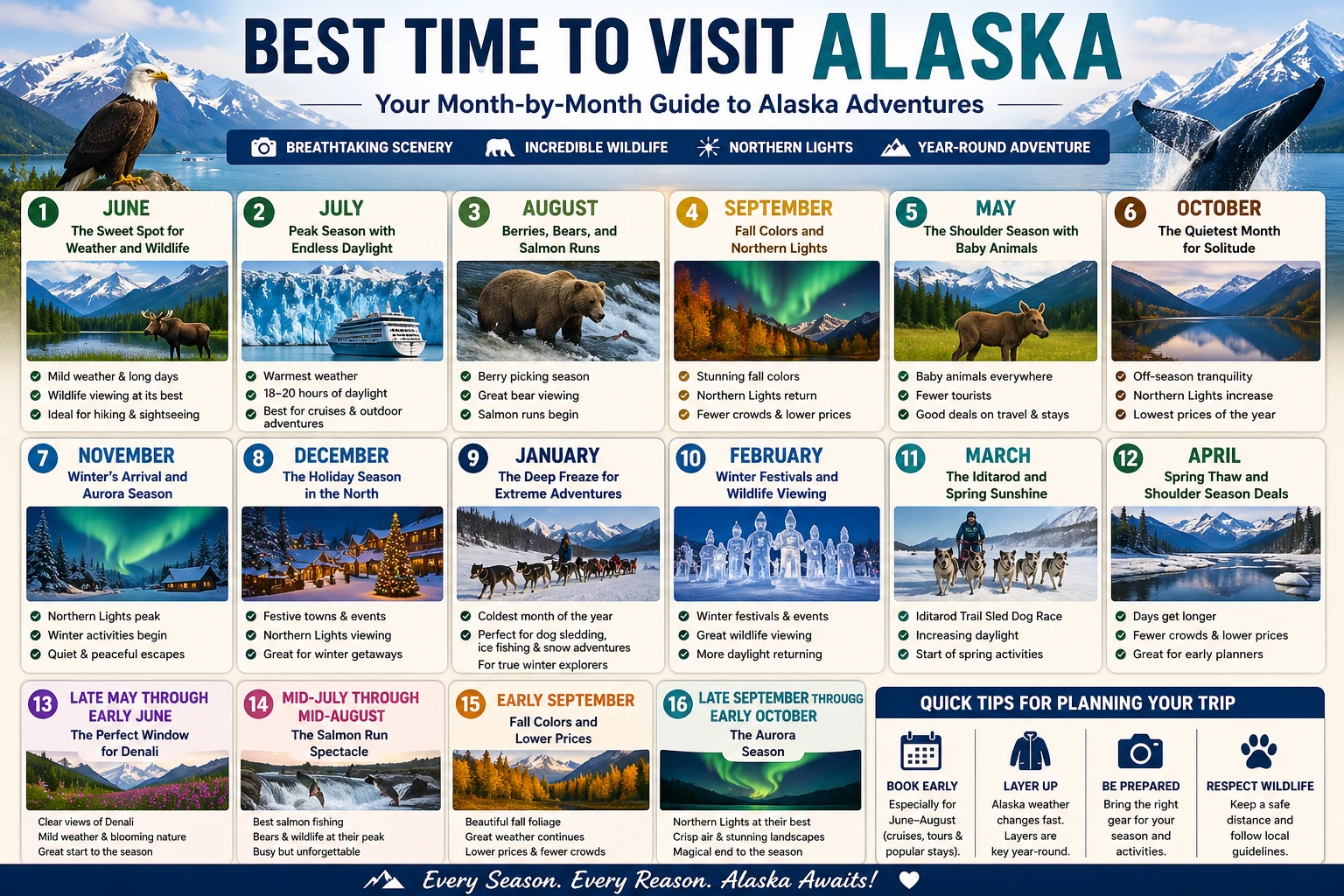
You’re probably wondering when to finally book that Alaska trip you’ve been dreaming about, and honestly, the answer isn’t as simple as “summer.” The best time to visit Alaska really depends on what you want to see and do—whether that’s chasing the Northern Lights, cruising through the Inside Passage, or hiking Denali’s backcountry. Alaska is a land of extremes, and each season offers a completely different experience, from the endless daylight of summer to the aurora-lit nights of winter. Let’s break it down month by month so you can plan the perfect 2026 adventure.
Understanding the Best Time to Visit Alaska for Every Type of Traveler
Alaska’s tourism season is surprisingly short, running roughly from mid-May through mid-September, but that doesn’t mean you should ignore the rest of the year. The shoulder seasons (May and September) offer fantastic deals and fewer crowds, while winter delivers magical snow-covered landscapes and the Northern Lights. Summer (June through August) is peak season with the best weather and wildlife viewing, but you’ll pay premium prices and share the trails with plenty of other travelers. Your ideal timing depends on your priorities: wildlife, weather, budget, or solitude.
1. June: The Sweet Spot for Weather and Wildlife
Best for: First-time visitors who want a balance of good weather and wildlife
June is arguably the best time to visit Alaska for most travelers because you get the best of both worlds—long days (up to 22 hours of daylight in Fairbanks) and temperatures that are comfortable without being too hot. Address: Denali National Park, Denali Park Road, Denali, AK 99755. Hours: Park open 24/7, visitor center 9 AM to 5 PM. Price: $15 per person for 7-day entrance. The park’s shuttle buses start running in early June, giving you access to the 92-mile Denali Park Road. You’ll see moose, caribou, and grizzly bears, and the wildflowers are starting to bloom. Cruise season is in full swing, so book your Inside Passage sailing early. June also sees the start of salmon runs, which means excellent fishing opportunities. The downside? Mosquitoes are out in force, so bring serious bug spray. Temperatures range from 45°F to 65°F, so pack layers.
2. July: Peak Season with Endless Daylight
Best for: Cruisers and families who want the warmest weather
July is Alaska’s warmest month, with temperatures hitting the high 60s and even low 70s in some areas. Address: Kenai Fjords National Park, Seward, AK 99664. Hours: Visitor center 9 AM to 6 PM. Price: $10 per person for 7-day entrance. This is prime time for glacier cruises out of Seward, where you’ll see calving glaciers, humpback whales, and sea otters. The midnight sun phenomenon means you can hike or fish until 11 PM without a headlamp. However, this is also the busiest and most expensive time to visit. Hotels in Denali and Seward book up months in advance, and prices for rental cars can exceed $200 per day. Wildlife viewing is at its peak—bear cubs are active, and salmon are running in rivers all over the state. If you’re planning a road trip, July offers the best driving conditions.
3. August: Berries, Bears, and Salmon Runs
Best for: Wildlife photographers and hikers
August is a magical month when Alaska’s wilderness is bursting with activity. Address: Katmai National Park, King Salmon, AK 99613. Hours: Visitor center 8 AM to 6 PM. Price: Free, but $80 for floatplane access from Homer. The sockeye salmon run peaks in August, attracting hundreds of brown bears to Brooks Falls. This is your best chance to see bears fishing from the viewing platforms. Blueberries and salmonberries are ripe for picking, and the tundra turns brilliant shades of red and orange. Temperatures are still pleasant (50°F to 65°F), but you’ll start to see fewer crowds after mid-August. Cruise ships are still running, but the shoulder season is approaching. This is also a great time for a road trip on the Seward Highway, one of the most scenic drives in America. Book your bear-viewing tour at least six months in advance.
4. September: Fall Colors and Northern Lights
Best for: Budget travelers and aurora chasers
September is the shoulder season, offering lower prices and stunning fall colors. Address: Chena Hot Springs Resort, 17600 Chena Hot Springs Rd, Fairbanks, AK 99712. Hours: Resort open 24/7, aurora viewing 10 PM to 2 AM. Price: $15 for day use of hot springs. The Northern Lights become visible again in late August and peak in September, especially around the autumnal equinox (September 22). The birch and aspen trees turn gold, creating a photographer’s paradise. Cruise ships stop running by mid-September, so you’ll have the Inside Passage to yourself. Wildlife is still active, though bears are preparing for hibernation. The downside is that many lodges and tours close after mid-September, and weather becomes unpredictable with rain and early snow. Temperatures range from 35°F to 55°F. This is the best time to visit Alaska if you’re on a tight budget and want to see the aurora.
5. May: The Shoulder Season with Baby Animals
Best for: Wildlife enthusiasts and photographers
May is the start of the shoulder season, when Alaska begins to wake up from winter. Address: Alaska Wildlife Conservation Center, Mile 79 Seward Highway, Portage, AK 99587. Hours: 10 AM to 5 PM. Price: $17 for adults. The snow is melting, rivers are swelling, and baby animals are everywhere—moose calves, bear cubs, and bison calves. Cruise ships start running in mid-May, and Denali National Park opens its shuttle bus service. Temperatures are cool (35°F to 55°F), and you’ll need rain gear. The advantage is that you’ll have much of the state to yourself, and prices are 30-40% lower than peak season. The Northern Lights are still visible in early May, though the increasing daylight makes them harder to see. This is a great month for a road trip because the roads are clear but not crowded.
6. October: The Quietest Month for Solitude
Best for: Solitude seekers and budget travelers
October is one of Alaska’s best-kept secrets—it’s incredibly quiet, and prices are rock bottom. Address: Mendenhall Glacier Visitor Center, 8510 Mendenhall Loop Rd, Juneau, AK 99801. Hours: 10 AM to 4 PM (limited hours). Price: Free. The fall colors are fading, and winter is creeping in, but you can still hike in the lower elevations. The Northern Lights are spectacular this month, with clear, dark nights perfect for viewing. Most tourist infrastructure is closed, so you’ll need to be self-sufficient. This is the best time to visit Alaska for travelers who want to experience the state without crowds and don’t mind cold weather (25°F to 40°F). You can score incredible deals on flights and hotels. Just be prepared for snow in the mountains and limited daylight (8-10 hours).
7. November: Winter’s Arrival and Aurora Season
Best for: Northern Lights photographers
November marks the official start of winter in Alaska, with snow covering most of the state. Address: Arctic Circle, Dalton Highway, AK. Hours: 24/7. Price: Free, but guided tours cost $200-$400. The Northern Lights are at their peak activity, and the long nights (18-20 hours of darkness) provide excellent viewing conditions. Fairbanks is the best place to see the aurora, with an average of 240 clear nights per year. Temperatures drop to 0°F to 20°F, so you’ll need serious winter gear. Dog mushing season begins, and you can take a sled dog tour. The downside is that most national parks are inaccessible, and daylight is limited to about 6 hours. This is not the time for first-time visitors who want to see the entire state.
8. December: The Holiday Season in the North
Best for: Winter sports enthusiasts and aurora chasers
December is the darkest month, with only 3-4 hours of daylight in Fairbanks, but it’s also one of the most magical. Address: Alyeska Resort, 1000 Arlberg Ave, Girdwood, AK 99587. Hours: Ski lifts 9 AM to 4 PM. Price: $89 for a day lift ticket. The ski season is in full swing, and Alyeska offers world-class downhill skiing and snowboarding. Dog mushing, ice fishing, and snowmobiling are popular activities. The Northern Lights are visible almost every clear night. Christmas in Alaska is special, with small towns lighting up with holiday decorations. The Anchorage Fur Rendezvous festival takes place in February, but the buildup starts in December. Temperatures range from -10°F to 20°F. This is the best time to visit Alaska for winter sports and aurora viewing.
9. January: The Deep Freeze for Extreme Adventures
Best for: Adventurers who love extreme cold
January is the coldest month in Alaska, with temperatures in Fairbanks averaging -15°F to -25°F. Address: Chena Hot Springs, Fairbanks, AK. Hours: Resort open 24/7. Price: $15 for day use. The ice is thick enough for ice fishing, and the aurora is still spectacular. The World Ice Art Championships take place in Fairbanks in February, but the ice sculpting begins in January. This is a great time for a winter road trip to see the Arctic Circle, but you’ll need a vehicle with studded tires and a block heater. Daylight is still limited (4-5 hours), so plan your activities accordingly. This month is not for the faint of heart—it’s cold, dark, and remote. But if you’re looking for a true Arctic experience, January delivers.
10. February: Winter Festivals and Wildlife Viewing
Best for: Festival lovers and photographers
February brings slightly more daylight (6-7 hours) and some of the best winter festivals in Alaska. Address: Anchorage, AK (Fur Rendezvous festival locations vary). Hours: Festival events 10 AM to 10 PM. Price: Free to $50 for events. The Anchorage Fur Rendezvous is a 10-day festival with dog mushing races, snowshoe softball, and a carnival. The Iditarod Trail Sled Dog Race starts in early March, but the pre-race activities begin in February. Wildlife viewing is excellent in winter—moose, wolves, and foxes are easier to spot against the snow. The Northern Lights are still active, and the cold temperatures mean clear skies. This is the best time to visit Alaska for cultural events and winter photography.
11. March: The Iditarod and Spring Sunshine
Best for: Dog mushing fans and families
March is the transition month when winter starts to loosen its grip. Address: Iditarod Headquarters, 2100 S. Knik-Goose Bay Rd, Wasilla, AK 99654. Hours: 9 AM to 5 PM. Price: Free to watch the start. The Iditarod Trail Sled Dog Race begins in Anchorage on the first Saturday of March, drawing crowds from around the world. Daylight increases to 10-12 hours, and temperatures rise to 10°F to 30°F. This is a great month for families because the weather is less extreme, and there are plenty of winter activities. The Northern Lights are still visible, though the increasing daylight makes them less frequent. Skiing and snowmobiling are still excellent. This is the best time to visit Alaska for dog mushing enthusiasts.
12. April: Spring Thaw and Shoulder Season Deals
Best for: Budget travelers and early birds
April is the quietest month in Alaska, with most tourist facilities still closed. Address: Kenai Peninsula, AK. Hours: Various. Price: Free to $50 for activities. The snow is melting in the lower elevations, and rivers are starting to flow. You can still see the Northern Lights in early April, and the daylight stretches to 14-16 hours. This is a great month for a road trip if you don’t mind muddy roads and closed lodges. Prices are at their lowest, and you’ll have the state to yourself. Wildlife is emerging from hibernation, and you might see bears and moose. The downside is that many attractions are closed until mid-May. This is the best time to visit Alaska for adventurous budget travelers.
13. Late May through Early June: The Perfect Window for Denali
Best for: Hikers and backpackers
The window between late May and early June is ideal for visiting Denali National Park. Address: Denali National Park Visitor Center, Mile 237.5 George Parks Highway, Denali, AK 99755. Hours: 9 AM to 6 PM. Price: $15 per person. The park’s shuttle buses start running in late May, and the snow is melting at lower elevations. You can hike the Savage River Loop and Mount Healy Overlook without snowshoes. The crowds are still manageable, and the wildlife is active. This is also a great time for a road trip on the Parks Highway. Temperatures range from 40°F to 60°F. Book your accommodations early because Denali fills up fast.
Late May through Early June: The Perfect Window for Denali can be a strong window for travelers planning the when to visit alaska: a month-by-month planning guide for 2026, especially if you care about the balance between weather, crowds, and overall comfort. Conditions during this period often shape trail access, sightseeing quality, hotel pricing, and how easy it is to enjoy the destination at a relaxed pace.
For many visitors, late may through early june: the perfect window for denali is best when the goal is matching the trip to your priorities. If you plan around sunrise activities, flexible bookings, and the most popular attractions, this timing can help you get a more rewarding and better organized trip.
14. Mid-July through Mid-August: The Salmon Run Spectacle
Best for: Bear viewing and fishing
The peak of the salmon run occurs in mid-July through mid-August, making this the best time to visit Alaska for bear viewing. Address: Brooks Falls, Katmai National Park, AK. Hours: 7 AM to 7 PM. Price: $80 for floatplane access. The bears at Brooks Falls are so focused on catching salmon that you can watch them from platforms just 50 feet away. This is a bucket-list experience for wildlife lovers. The fishing is also excellent, with salmon running in rivers all over the state. The downside is that this is peak tourist season, so book everything at least six months in advance.
Mid-July through Mid-August: The Salmon Run Spectacle can be a strong window for travelers planning the when to visit alaska: a month-by-month planning guide for 2026, especially if you care about the balance between weather, crowds, and overall comfort. Conditions during this period often shape trail access, sightseeing quality, hotel pricing, and how easy it is to enjoy the destination at a relaxed pace.
For many visitors, mid-july through mid-august: the salmon run spectacle is best when the goal is matching the trip to your priorities. If you plan around sunrise activities, flexible bookings, and the most popular attractions, this timing can help you get a more rewarding and better organized trip.
15. Early September: Fall Colors and Lower Prices
Best for: Photographers and budget travelers
Early September offers the best of both worlds—fall colors and lower prices. Address: Hatcher Pass, Palmer, AK 99645. Hours: 24/7. Price: Free. The tundra turns brilliant shades of red, orange, and yellow, creating a photographer’s paradise. The crowds have thinned out, and prices drop by 30-40%. The Northern Lights become visible again, and the weather is still pleasant (40°F to 55°F). This is the best time to visit Alaska for a fall colors road trip.
Early September: Fall Colors and Lower Prices can be a strong window for travelers planning the when to visit alaska: a month-by-month planning guide for 2026, especially if you care about the balance between weather, crowds, and overall comfort. Conditions during this period often shape trail access, sightseeing quality, hotel pricing, and how easy it is to enjoy the destination at a relaxed pace.
For many visitors, early september: fall colors and lower prices is best when the goal is matching the trip to your priorities. If you plan around sunrise activities, flexible bookings, and the most popular attractions, this timing can help you get a more rewarding and better organized trip.
16. Late September through Early October: The Aurora Season
Best for: Northern Lights enthusiasts
The aurora season peaks in late September through early October, when the equinox brings increased geomagnetic activity. Address: Fairbanks, AK. Hours: Best viewing from 10 PM to 2 AM. Price: Free. Fairbanks is the best place in the world to see the Northern Lights, and this is the ideal time. The weather is still mild (30°F to 45°F), and the nights are long enough for good viewing. Book a cabin or lodge with a northern exposure for the best experience.
Late September through Early October: The Aurora Season can be a strong window for travelers planning the when to visit alaska: a month-by-month planning guide for 2026, especially if you care about the balance between weather, crowds, and overall comfort. Conditions during this period often shape trail access, sightseeing quality, hotel pricing, and how easy it is to enjoy the destination at a relaxed pace.
For many visitors, late september through early october: the aurora season is best when the goal is matching the trip to your priorities. If you plan around sunrise activities, flexible bookings, and the most popular attractions, this timing can help you get a more rewarding and better organized trip.
Conclusion
Alaska is a year-round destination, but the best time to visit Alaska really depends on what you want to do. For first-time visitors, June through August offers the best weather and wildlife viewing, but you’ll pay premium prices. For budget travelers and aurora chasers, September and March are the sweet spots. For winter sports enthusiasts, December through February is ideal. No matter when you go, Alaska will leave you breathless. Just remember to book early for peak season and pack layers for any season. Happy travels!
similar posts
Where to Stay in San Diego in 2026: Best Neighborhoods & Hotels
17 Essential Travel Photography Tips for 2026: Capture Your Adventures Like a Pro
The Ultimate Guide to the Top 10 Places to Visit in the World in 2026
15 Essential Business Travel Tips for 2026: Work Smarter on the Road
15 Must-See Places to Visit in the US in 2026
Best Time to Visit the Grand Canyon in 2026