
Top European Destinations to Add to Your 2026 Travel List

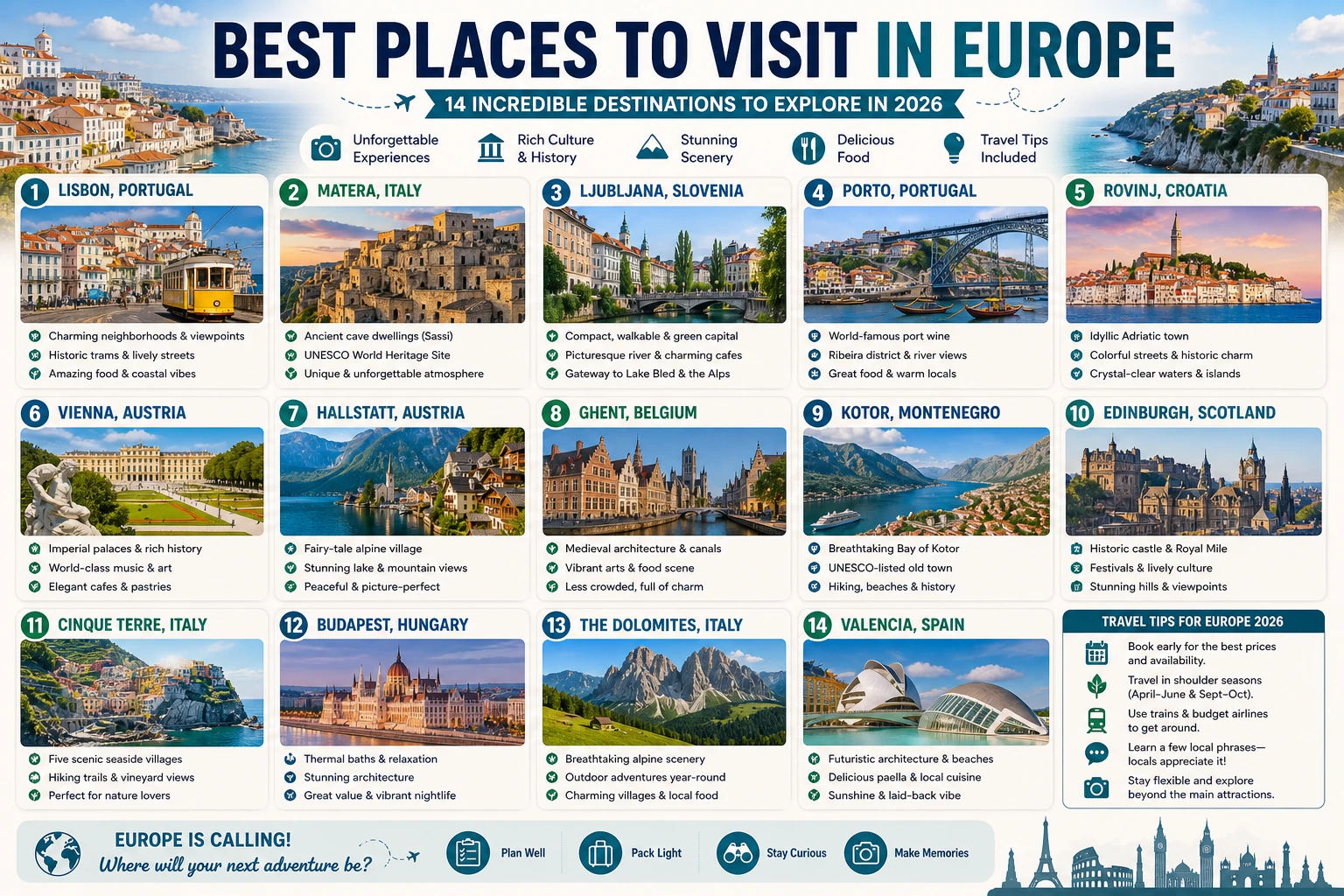
You’re probably overwhelmed by the sheer number of incredible places to see in Europe, and honestly, that’s a good problem to have. After spending years crisscrossing the continent, I can tell you that the best places to visit in europe for 2026 aren’t just the usual suspects—they’re a mix of iconic cities, underrated gems, and evolving destinations that deserve your attention right now. Whether you’re chasing history, food, or epic landscapes, this list will help you plan a trip that feels fresh and unforgettable.
Why These Are the Best Places to Visit in Europe for 2026
Europe’s travel scene is constantly shifting, with new museums opening, old neighborhoods being revived, and hidden corners finally getting their moment in the spotlight. In 2026, you’ll want to prioritize destinations that offer something unique—whether it’s avoiding peak crowds, finding affordable luxury, or experiencing culture that hasn’t been overrun by tourism. Here are 14 spots that hit all the right notes.
1. Lisbon, Portugal
Best for: First-time visitors and food lovers
Address: Lisbon, Portugal
Hours: Most attractions open 9 AM–6 PM
Price: €15–€30 per day for budget travelers
Lisbon has been having a moment for years, and 2026 is no different. The city’s seven hills offer stunning viewpoints (try Miradouro da Graça at sunset), while the historic trams clatter through narrow streets that smell like grilled sardines and pastéis de nata. Don’t skip the LX Factory—a converted industrial complex now packed with indie shops and street art. For a day trip, hop the train to Sintra’s fairy-tale palaces or Cascais’ coastal cliffs. The best part? Lisbon remains one of Western Europe’s more affordable capitals, with a solid glass of vinho verde costing around €2.50.
2. Matera, Italy
Best for: History buffs and photographers
Address: Matera, Basilicata, Italy
Hours: Sassi district accessible 24/7
Price: Free to explore; guided tours €10–€20
Matera is the kind of place that makes you question everything you thought you knew about Italy. This ancient city, carved into limestone cliffs, was once called “the shame of Italy” for its extreme poverty. Today, it’s a UNESCO World Heritage site and 2019 European Capital of Culture, with cave dwellings transformed into boutique hotels, restaurants, and museums. Wander the Sassi districts at dusk when the golden stone glows, and book a table at a rupestrian church-turned-restaurant for an unforgettable meal. Matera is quieter than Rome or Florence, but its raw beauty is unmatched.
3. Ljubljana, Slovenia
Best for: Eco-conscious travelers and couples
Address: Ljubljana, Slovenia
Hours: City center walkable anytime
Price: €30–€50 per day
Ljubljana might be Europe’s greenest capital—it won the European Green Capital award in 2016, and it’s only gotten better. The car-free city center is a joy to explore on foot or by bike, with the Ljubljanica River winding past outdoor cafes and the iconic Triple Bridge. Climb the hill to Ljubljana Castle for panoramic views, then cool off at the open-air market along the riverbank. For a unique experience, rent a paddleboat or join a food tour that highlights local wines and Istrian truffles. It’s also a perfect base for day trips to Lake Bled or the Postojna Cave.
4. Porto, Portugal
Best for: Wine enthusiasts and urban explorers
Address: Porto, Portugal
Hours: Port wine cellars open 10 AM–6 PM
Price: €20–€40 per day
Porto is Lisbon’s scrappy, charming cousin, and it’s having a serious renaissance in 2026. The Ribeira district, with its colorful houses leaning over the Douro River, is a photographer’s dream, but the real magic happens across the water in Vila Nova de Gaia. That’s where the port wine lodges are—book a tasting at Graham’s or Sandeman for a crash course in fortified wine. Don’t miss the Livraria Lello, a stunning bookstore that inspired J.K. Rowling, and eat a francesinha (a monstrous sandwich smothered in beer sauce) at least once. Porto is also more affordable than Lisbon, making it a smart choice for budget travelers.
5. Rovinj, Croatia
Best for: Beach lovers and romantic getaways
Address: Rovinj, Istria, Croatia
Hours: Old town accessible 24/7
Price: €40–€60 per day
Rovinj is what happens when a fishing village grows up without losing its soul. This Istrian gem has a pastel-colored old town that juts out into the Adriatic, with cobblestone streets leading up to St. Euphemia’s Church. The beaches here are rocky but gorgeous—try Lone Bay or the more secluded Monte beach. For food, Istria is famous for truffles, olive oil, and seafood, so don’t skip a dinner of black risotto or homemade pasta. Rovinj is less crowded than Dubrovnik, but it’s gaining popularity fast, so 2026 is the time to visit.
6. Vienna, Austria
Best for: Culture seekers and classical music fans
Address: Vienna, Austria
Hours: Museums open 10 AM–6 PM
Price: €50–€70 per day
Vienna is the kind of city that makes you feel instantly sophisticated. The coffeehouse culture is alive and well—find a spot at Café Central or Café Sperl and order a Melange with a slice of Sachertorte. The art scene is world-class, from the Kunsthistorisches Museum to the Belvedere’s Klimt collection. But Vienna isn’t stuck in the past: the MuseumsQuartier is a buzzing cultural hub with contemporary galleries and nightlife. For a splurge, catch a performance at the Vienna State Opera or take a horse-drawn carriage ride through the Ringstrasse. Pro tip: visit in spring or fall to avoid summer crowds.
7. Hallstatt, Austria
Best for: Nature lovers and Instagrammers
Address: Hallstatt, Upper Austria
Hours: Salt mine tours 9 AM–4 PM
Price: €60–€80 per day (accommodation is pricey)
Yes, Hallstatt is the picture-perfect village you’ve seen on your feed, but it’s even better in person. Tucked between the Dachstein Alps and a crystalline lake, this UNESCO site feels like a fairy tale. The salt mine, one of the oldest in the world, offers a fascinating underground tour with a slide and a mirror lake. Hike up to the Hallstatt Skywalk for jaw-dropping views, or take a boat ride across the lake to Obertraun for a quieter perspective. Hallstatt gets crowded during the day, so stay overnight to experience it after the day-trippers leave.
8. Ghent, Belgium
Best for: Beer lovers and history enthusiasts
Address: Ghent, Belgium
Hours: Gravensteen castle open 10 AM–6 PM
Price: €30–€50 per day
Ghent is Bruges’ cooler, less touristy sibling. The medieval center is stunning, with the Gravensteen castle, the towering St. Bavo’s Cathedral, and the Graslei waterfront lined with guild houses. But Ghent has a youthful energy thanks to its large student population—expect craft breweries, indie music venues, and street art hiding around every corner. Don’t leave without trying a local beer at Dulle Griet or tucking into a plate of stoofvlees (Flemish beef stew). The city is also a short train ride from Brussels, making it an easy day trip or base.
9. Kotor, Montenegro
Best for: Adventurers and budget travelers
Address: Kotor, Montenegro
Hours: Old town accessible 24/7
Price: €25–€40 per day
Kotor is the Bay of Kotor’s crown jewel, a fortified town that feels like a mini-Dubrovnik without the crowds or price tag. The old town is a maze of marble streets, Orthodox churches, and cat cafes, but the real adventure is the hike up to the fortress of San Giovanni. It’s 1,350 steps, but the view of the bay is worth every drop of sweat. For a different perspective, take a boat to the Our Lady of the Rocks island or drive the serpentine road to the Lovćen National Park. Montenegro is still one of Europe’s best values, and Kotor is its star.
10. Edinburgh, Scotland
Best for: History lovers and whisky drinkers
Address: Edinburgh, Scotland
Hours: Edinburgh Castle open 9:30 AM–5 PM
Price: £40–£60 per day
Edinburgh is a city of two halves: the medieval Old Town, with its cobblestones and closes, and the Georgian New Town, with its elegant squares and gardens. The Edinburgh Castle dominates the skyline, but don’t skip the Scotch Whisky Experience for a crash course in Scotland’s national drink. For something off the beaten path, explore the underground vaults on a ghost tour or hike Arthur’s Seat for sunrise. The city also has a thriving food scene, from Michelin-starred restaurants to cozy pubs serving haggis. August is festival season, but 2026’s Fringe is already shaping up to be epic.
11. Cinque Terre, Italy
Best for: Hikers and coastal lovers
Address: Cinque Terre, Liguria, Italy
Hours: Trails open dawn to dusk
Price: €10–€15 for a Cinque Terre Card
Cinque Terre is a string of five fishing villages clinging to the Ligurian coast, and it’s as dreamy as you’ve heard. The Sentiero Azzurro trail connects all five villages, with stunning sea views and terraced vineyards. Each village has its own character: Manarola is the most photographed, Vernazza has the best beach, and Corniglia is the quietest. To avoid crowds, visit in the shoulder season (April–May or September–October) and stay in Levanto or La Spezia for cheaper accommodations. Don’t leave without trying the local pesto and focaccia.
12. Budapest, Hungary
Best for: Nightlife and spa enthusiasts
Address: Budapest, Hungary
Hours: Thermal baths open 6 AM–10 PM
Price: €30–€50 per day
Budapest is the “Paris of the East,” but it’s got a gritty, vibrant edge that sets it apart. The city is split by the Danube: Buda is hilly and historic, with the Fisherman’s Bastion and Buda Castle, while Pest is flat and buzzing, with ruin bars like Szimpla Kert and the Great Market Hall. The thermal baths are a must—Széchenyi is the grandest, but Gellért has more intimate charm. For a unique experience, take a nighttime cruise on the Danube to see the Parliament building lit up. Budapest is also one of Europe’s most affordable capitals, with a great meal and drinks costing under €20.
13. The Dolomites, Italy
Best for: Outdoor enthusiasts and photographers
Address: South Tyrol, Italy
Hours: Trails accessible year-round
Price: €80–€120 per day (accommodation and lifts)
The Dolomites are a UNESCO World Heritage site and one of the most stunning mountain ranges on Earth. In summer, the hiking is world-class—try the Tre Cime di Lavaredo loop or the Alpe di Siusi meadows. In winter, it’s a skier’s paradise, with the Sella Ronda circuit connecting multiple resorts. But you don’t need to be an athlete to enjoy it: the cable cars and mountain huts (rifugi) make it accessible to everyone. Stay in Cortina d’Ampezzo or Ortisei for easy access, and don’t miss the local cuisine, a delicious mix of Italian and Austrian influences.
14. Valencia, Spain
Best for: Foodies and architecture lovers
Address: Valencia, Spain
Hours: City of Arts and Sciences open 10 AM–8 PM
Price: €30–€50 per day
Valencia is often overshadowed by Barcelona and Madrid, but it’s a gem in its own right. The futuristic City of Arts and Sciences complex is a marvel of architecture, while the old town (El Carmen) is a maze of narrow streets, tapas bars, and Roman ruins. The food scene is incredible—this is the birthplace of paella, so order it at a beachside restaurant in El Cabanyal. For a hidden gem, visit the Central Market for fresh produce and a glass of horchata. Valencia also has some of Spain’s best beaches, with Malvarrosa being the most popular.
Conclusion
Europe in 2026 is full of possibilities, from the sun-drenched coasts of Croatia to the alpine peaks of the Dolomites. The best places to visit in europe aren’t just about ticking off landmarks—they’re about finding the cities and towns that resonate with you, whether that’s sipping port in Porto, hiking in Cinque Terre, or soaking in Budapest’s thermal baths. My biggest advice? Slow down. Pick two or three destinations and really get to know them instead of rushing through a dozen. You’ll leave with memories that last far longer than any passport stamp.
similar posts
The Ultimate Guide to the Best Time to Visit Puerto Rico in 2026
When to Visit Switzerland: A Month-by-Month Travel Breakdown for 2026
Top Pet Friendly Hotels in Atlanta You and Your Dog Will Love (2026)
Where to Stay in Puerto Rico: Neighborhoods, Hotels, and Local Tips for 2026
15 Travel Tips and Tricks That Will Save You Money, Time, and Stress in 2026
Pet Friendly Hotels in New Orleans: Where to Stay With Your Dog in 2026